Showing posts with label Crisis Core. Show all posts

Wednesday, December 24, 2008

The Year in Review: The Best Games of 2008

Above: This is the one.
(Note to Harmonix: "This Is the One" would make excellent DLC.)


We're wrapping up our recap of the year that was. Today: the best games of 2008.

If you want to read the blurbs, you'll have to read the feature at thephoenix.com. But for discussion, here's my list of the top 10 of 2008:
  1. Rock Band 2
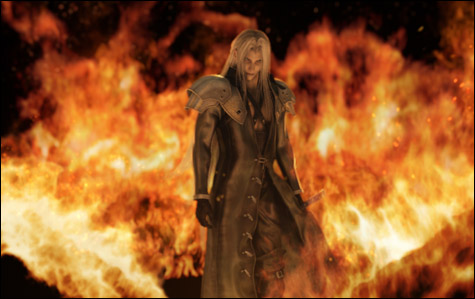
  2. Crisis Core: Final Fantasy VII
  3. Braid
  4. Far Cry 2
  5. Left 4 Dead
  6. Fallout 3
  7. No More Heroes
  8. Grand Theft Auto IV
  9. Geometry Wars Retro Evolved 2
  10. Yakuza 2

A couple things should go without saying. First, yes, I am aware these were my favorite games of the year and not objectively the best. Second, there were more than a few 2008 releases that I missed, although thanks to my cram session I think Fable 2 might be the only serious contender there. But who knows, maybe I would have loved something that got tepid reviews elsewhere, like The Force Unleashed.

I do feel that 2007 was a much better year for games overall. Not that it matters what the calendar says. You could reframe the debate and come out with a much different-looking list, as Iroquois Pliskin does in suggesting that video games completed the Tiger Slam from August 2007 through August 2008. What the heck -- we all enjoy these year-end lists, even if bitching about them is also fashionable. It's nice to take a minute and reflect on what we already have, before rushing headlong onto the next thing. Isn't that what the holidays are all about?

With that, I wish you all a merry Christmas and a happy New Year!

(Posting is likely to be light until January 5.)

Friday, December 12, 2008

Friday afternoon tidbits

The end of the year is coming up fast. I'm committed to a last-minute cram session, which includes, at the very least, Fallout 3, Prince of Persia, and Yakuza 2. Ryan keeps imploring me to give Castle Crashers a go. I may have to listen to him on this one. Either way, all this stuff is going to keep me very busy this weekend. What will you be playing?

-I don't know a single person who listens to Nickelback. Do you? I know an awful lot of people who are passionate about rock music, but not one of them would admit to liking this band. And yet, in an era when album sales and live attendance are down industry wide, the rock band that no rock fans like continues to sell out arenas and release multi-platinum albums. What this has to do with the news that Nintendo sold 2 million Wiis in November, I'll leave up to you.

-Well, I didn't get a membership card this year, either, but at least Slate's Gaming Club, the year-end roundtable discussion between Chris Suellentrop, Seth Schiesel, Stephen Totilo, and N'Gai Croal, linked to me. In two places! As it was last year, some excellent reading here from some first-rate writers. Next year, perhaps I can stand outside in the rain and watch them type, a single tear rolling down my cheek.

-Shawn Elliott's official reviews symposium lifts off soon, but the meantime check out a couple more unofficial entries from Gary Hodges and Daniel Purvis. I love reading how other people approach their work, and I hope it's true for them, as it was for me, that sitting down and thinking about these questions is a clarifying exercise.

-I may as well acknowledge that a few people have complained about the whole symposium thing, such as some guy on the QT3 forums, and PixelVixen707, who I should remind you is not a real person and is just part of a marketing campaign for a book. I don't understand the objections. People in every field participate in professional development courses, whether it's novelists joining writers' workshops, or tech dudes taking programming classes. How is this any different? I suppose if you presume that it's going to be a circle jerk, sure, there's not much value in that, but I'm optimistic enough to think that it will encourage some genuine self-reflection.

-There's also kind of a weird, but ultimately positive, take on it from Gamers with Jobs.

-I'm not a fan of the lists people make about the sexiest videogame heroines, or the top girl-on-girl kisses in gaming history, or whatever, but it's only fair that the Phoenix's Maddy Myers put together her list of the top 10 videogame studs of 2008. Can't even quibble with her top pick, really, even if he had some questionable genes.

Monday, April 21, 2008

Conflict resolved


If you've been keeping abreast of my Twitter (that sounds filthy!), you'll know I had a slight incident over the weekend involving my ankle, a game of ultimate frisbee, and a strategically placed hole in a field. I was leaping to cover somebody on the opposing team and landed in a ditch. My right ankle made two distinct popping noises that were audible at least twenty feet away, and promptly swelled up like a balloon. I spent the rest of the day with my foot propped up, applying ice periodically. The swelling's gone down a bit, although the bruising would likely make you gag.

But it's not all bad. I took the day off, and as a result finally had time to polish off Crisis Core. As usual with these games, the final boss battle was a little disappointing. I don't like my games too difficult, but it seems like if you spend even the slightest bit of time leveling up, the last boss comes off as a chump. Still, the actual fight wasn't the true conclusion of the game -- it was followed in short order by a heartbreaking playable sequence that I was hoping would never come. Made me want to play Final Fantasy VII again right away.

But for real now, Squeenix, what's the score on FFXIII? Kick-ass portable games are all well and good, but my hopes have been fully re-energized for a full-blown PlayStation 3 version. Maybe my ankle will even have healed by the time it's out.

Wednesday, April 16, 2008

Zack attack

On a cheerier note, my review of Crisis Core: Final Fantasy VII is up now at thephoenix.com. I can't recommend this one highly enough.

I'm actually still trying to finish it. I put just about 20 hours into the game for the review, but I keep getting sidetracked by the missions. There are a few in-game side-quests to undertake, but the bulk of them are menu-driven: at a save point, you just select the "missions" option. While I'm not sure just how many missions there are, it's got to be in the hundreds. I think I've spent the majority of my playing time on them and I think I've only recently crested 40% completion.

Yesterday I made the mistake of taking on the mission with 1,000 Wutai soldiers, which took over an hour and ten minutes. It wasn't hard, particularly once the DMW gave me no MP cost for the duration, but the lack of difficulty almost made it more boring. And then my reward was "Mug" materia, which I am sure not to use. (Frankly, I've barely deviated from a mix of Fire/Blizzard/Thunder/Cure/MP Up/HP Up since I started, and it's served me well.)

But I'm just bitching because I thought I'd make more progress toward the main storyline. One thing I've always loved about the Final Fantasy series is how they can tell these tales about the end of the world, but the real drama is essentially between the main characters. You don't fight the bad guys just because it's the right thing to do, but because you need to put right some personal conflict. And it usually works. Certainly works here.

Thursday, April 03, 2008

Overdrawn at the memory bank: The power of nostalgia in games

I've been splitting my time recently between Super Smash Bros. Brawl and Crisis Core: Final Fantasy VII. The two games couldn't have less in common, except for one thing: they both tap into a deep well of nostalgia as an implicit part of the gameplay. These aren't your typical sequels or spin-offs. Unless you had some prior emotional attachment to the source material, it's likely that these games wouldn't make any sense to you at all.

Smash Bros. draws on well over two decades of some of the most popular and enduring gaming franchises around, from Donkey Kong through Pikmin. For those of us of a certain age in the early 1990s, the question of who would win a fight between Mario and Sonic the Hedgehog was a matter of grave import. Now, we can finally learn the answer. Hell, if you've ever played a video game in your life, you've probably spent time with more than one of the Smash Bros. roster. The whole experience of playing it is like being on a runaway train through nostalgia country.

But here's the thing I don't get about Smash Bros.'s popularity: The game is terrible.

Above: Your childhood memories exploited like the Brazilian rainforest.

I have never had fun with a Smash Bros. game in my life. Mostly, that's because the weird, floaty controls sometimes make me wonder if I'm commanding the right character. (I will grant the possibility that with four combatants onscreen, I often am trying to command the wrong character.) Now they've added a crappy adventure mode called The Subspace Emissary, and it is such a lousy example of platforming that I would have stopped playing it after about half an hour if beating it weren't the only way to unlock several major characters. The controls just aren't made for precision jumping and environmental navigation, and with few exceptions the levels are repetitive and boring.

The Subspace Emissary
, to its credit, doesn't really try to hide that it's just playing you like a fiddle. There's a story that makes no sense -- something about all the evil Nintendo characters trying to turn the good Nintendo characters into trophies -- but it's all just an excuse to burn through the cultural capital Nintendo has built up over the years. I'm reminded of when a heel pro wrestler gets on the microphone and insults the city he's in, just to score some easy boos. Smash Bros. is one cheap pop after another:

Look! It's Link, from The Legend of Zelda!

*Cheers*

Look, it's King Dedede!

*Boos*

Considering that Nintendo has been coasting on its major franchises in this generation, all Smash Bros. does for me is remind me that there was a time when these characters and their accompanying motifs meant I was in for a wonderful time. For all Nintendo's innovation on the hardware side with the Wii, Twilight Princess and Metroid Prime 3 were only more of the same, with a slightly different control scheme (in fairness, Super Mario Galaxy did innovate to a greater degree). And that's the case here.

Nintendo is banking, literally, on the fact that millions of people already know and love these characters. Obviously, if you like the game to begin with, this will strike you as no problem. For me, I can't help but feel like Nintendo's exploiting their most valuable properties -- or they're exploiting me.

Crisis Core similarly looks to the past for inspiration. It's a prequel to one of the grandest achievements in the gaming canon, Final Fantasy VII . But it does something Smash Bros. fails to do, and that's add to the original game instead of just strip-mining it for its vast, revenue-producing resources.

Above: Sustainable, long-term nostalgia farming.

Admittedly, I didn't approach Crisis Core with quite the level of built-in love for its source material as I had for some of the characters and settings in Smash Bros. (Metal Gear Solid and Metroid in particular). I played FFVII only once and loved it, but couldn't give you a detailed synopsis of the story, or the exact materia combination I used to vanquish the Ruby and Emerald Weapons. Still, the last time I played one of these FFVII spin-offs, I think I was doubly disappointed that it wasn't just a bad game -- it was a bad FFVII game.

Well, Crisis Core is a good game. A very good game. It succeeds on its own merits, as a stripped-down, portable RPG. The gameplay reminds me more of Final Fantasy X than VII -- there's no overworld screen, and your character, Zack, travels from one locale to the next essentially on rails. Zack fights battles on his own in a nearly real-time manner. Although you can queue up Zack's next action -- attack, cast a spell, use an item -- you can also guard or evade an enemy's attack at any time. Doing so uses up Action Points, which are analagous to Hit Points and Magic Points, so it's not always the best idea. It helps to streamline the gameplay, while still maintaining that basic Final Fantasy feel.

The Final Fantasy VII connection isn't the crux of Crisis Core's appeal, but it does serve to flesh out the universe and deepen the fanbase's understanding of the events of FFVII. In the original game, Zack was a character seen in flashback. He was integral to the narrative, but only in backstory. Crisis Core puts him center stage. The game essentially is that cutscene blown up to full size.

Consider how well-known characters are used. Sephiroth doesn't just pop up in a cheap cameo, like Frank Sinatra in Around the World in 80 Days. We knew, from Final Fantasy VII, what Sephiroth had done. We didn't understand why. Crisis Core fills in that picture. And in the hero, Zack, we have an inversion of the usual alienated Final Fantasy protagonist. Zack starts off as the idealistic company man, and grows disillusioned as the reality of Shinra and the SOLDIER program becomes clear to him. If you draw a line from Zack's naivete through Cloud's nihilism and his eventual redemption, you'll come up with something like a circle.

In both cases, the callbacks and references to games we already knew and loved work best when they're used as a spice, and not as the main course. Although millions of gamers genuinely enjoy the Smash Bros. gameplay, and a small minority even make money on it in competition, the latest installment strikes me as a bloated, aging rock band playing all its old hits. Nothing about it adds to our appreciation of the source material.

By contrast, Crisis Core crackles with vitality. Instead of reminding me what it felt like to play Final Fantasy VII for the first time, it's giving me something more valuable for the future: memories of what it felt like the first time I played Crisis Core.