Tuesday, May 13, 2008

Grand Theft Auto IV Review: Citizen Kane? Or 'Citizen You'?


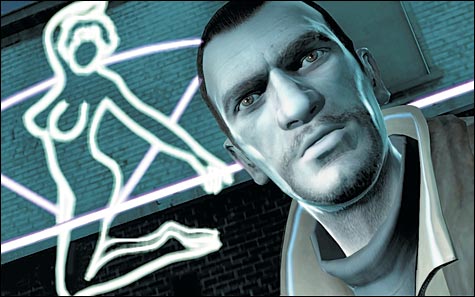
It's the moment you've been waiting for! My Grand Theft Auto IV review is up now at thephoenix.com. You'll notice it's a bit longer than my usual, which still proved to be not nearly enough words to cover everything I wanted to. Still, I think it's pretty good.

Because this review is running later than most mainstream coverage, I tried to avoid talking about the game in terms of whether it was good or bad -- although I think it's pretty clear that I thought it was good. Instead, I tried to look a little more deeply at why it's so good. Why is this game resonating where so many others don't, especially with people who aren't full-time gamers? I think it all comes down to player choice. There are some ways in which the framework Rockstar gives you is more restrictive than it appears, but I think their most impressive achievement is giving the player so much control over his own destiny. There are millions of ways to beat most missions, and we've all had several little moments in the game that probably won't ever be replicated by anyone else. That's really why we play.

By the way, that four-star review actually translates to a 9/10 in the paper. You don't see this critic getting swept up in the wave of hype!

What, I thought we were supposed to congratulate ourselves for that.

Monday, May 12, 2008

Supreme Court rules Supreme Court rules

Above: Grander theft auto

My arch-enemies at Village Voice Media* have posted their review of Grand Theft Auto IV. They are fairly bold in giving it a tepid write-up. It's still positive, but it's certainly the lowest rating I've seen for the game thus far. The reviewer, Gary Hodges, gives it an 8/10, and spends the bulk of the text highlighting some of the gameplay problems.

They're good points all, and I can't say I disagree with any of them. In fact, the unflattering comparisons to Crackdown are well taken. If I had to say which was the better game, I'd go with Crackdown. It doesn't try to do as much as Grand Theft Auto, but as a result it's tighter and more playable. The makers of Crackdown opted to do a few things exceptionally well, rather than try to do everything passably.

For all the ways GTA lets you explore the open world of Liberty City, Niko and the environment never seem to mesh perfectly. He looks like he's being filmed against a green screen when it comes to scrambling up hillsides and other areas with irregular footing. By contrast, in Crackdown, characters really could go anywhere and do anything. If you noticed a little outcropping on the side of a building, your character could jump up and grab it. He could pick up any objects, provided his strength level was sufficient. The entire environment was usable. In Grand Theft Auto, much of it is ornamental.

And that's okay. Part of the reason GTA is so successful is that it puts the character in a living world in which he isn't always the focal point. Liberty City is full of citizens going about their lives. They don't know or care who Niko is. To them, he's just another stranger they'll encounter out of thousands -- you know, unless he happens to be running from the cops with guns blazing.

The Voice's criticisms of GTA are well taken, and I think any honest observer would have to admit that they are fair. In fact, it's strange to me that such a negative review still resulted in the 8/10 score, but I know from personal experience that sometimes the score you give a game and the review you write don't necessarily match up, even if you believe in them both. We in the alt-weekly biz have little space in which to work, and that sometimes means choosing one thing to focus on at the expense of balance.

Hodges does seem to give himself a 10/10 for his own critical prowess, devoting his introduction and conclusion to belittling the across-the-board perfect scores the game has gotten (this is mentioned off-handedly in my own upcoming review), and congratulating himself on standing against the tide of mainstream opinion. I'd like to be bothered by this a little more, but, damn it, he's pretty much right. The Metacritic score for the PS3 version is holding steady at 99, and the Xbox 360 version is just one point lower. That's crazy. It's crazy for all the reasons Hodges points out.

I've heard a lot of people praise the controls as being such a huge step forward for Grand Theft Auto, but they're exactly as far behind the curve as they were in past GTA games. Compared to San Andreas, sure, the shooting controls are phenomenal. Compared to Gears of War or Rainbow Six Vegas, not so much. Given how important shooting is to the game, you'd think this would have bothered somebody. No, it doesn't ruin the game -- not by a long shot -- but it's hardly compatible with "best game ever" accolades. If somebody wanted to catalog every legitimate complaint a person could have with this game, they'd soon have a novella.

So, Gary Hodges, I salute your vainglorious iconoclasm. You and your VVM cohort may have won this battle, but the war is far from over. The Phoenix will crush you!**

*Not really.

**Not really.

Thursday, May 08, 2008

When is a game finished?


Today's brain food comes from Stephen Totilo at MTV Multiplayer, who wrote a post called "A New Theory: Maybe Game Reviewers Don't Need to Finish Games." Frankly, I didn't realize they did need to. Even Gamespot's own review policy says they don't necessarily finish everything they play.

I wrote a fairly long comment on the Multiplayer post, if you click through, but I want to focus on another point that I addressed only obliquely: Just when is a player "finished" with a game, anyway? Sometimes, the answer is pretty obvious. Take BioShock, for example. Although that game gave you several ways to make it to the finish line, everybody who played had to follow the same basic path through the story. There were no other gameplay modes besides the single-player campaign. I think most people would agree that playing through the story to the end credits would count as finishing BioShock.

What about Grand Theft Auto IV? You can play the main missions and still miss a hefty chunk of what the game has to offer. I would argue that ignoring the missions altogether is no way to play, but lots of people do just that. They set up explosive interactions in the game world like kids with a chemistry set. They don't care about structure or narrative, and they wouldn't have it any other way. Some people will never be finished with this game in a definite sense. That's part of the design.

Finally, take it all the way to the extreme: When is World of Warcraft finished? When is Tetris finished? When is The Sims finished? These are games that don't actually end. Or, more accurately, they end when the player decides they do. The ending isn't built into the game; it comes from the player.

This brings up, again, one of the inherent pitfalls in reviewing games. We don't all approach games with the same set of expectations. One of the things that actually sucks about reviewing something like Grand Theft Auto is the temptation to charge through the story in order to finish the game. That's missing the forest for the trees. It wouldn't feel fair, either, to ignore the game's numerous scripted events and missions, and just see how many different ways you can murder bystanders. But there's always going to be a huge group of players whose interests don't align with the reviewer's, because of all the different reasons we play.

A key task for any reviewer is to identify what a game is trying to do, and judge it accordingly. Sometimes a story is perfunctory. Sometimes a multiplayer mode is tacked on. That doesn't necessarily mean that the game's core strengths are lessened. The best games do find a way to succeed on several levels, but it's simply not a requirement for your garden-variety good game to excel in several different areas. Doing well in one is usually enough.

I would argue that storytelling is but one of a few crucial elements, without which GTA would be a different game. So while it's important to get a good sense of the story (and it is very involving), completing the storyline at the expense of exploring the city, building relationships with the characters, and trying some multiplayer would certainly not be the same as finishing the game. Frankly, I'm not sure what would.

What do you think? With so many games designed to be played and replayed endlessly, when can we say we're finished with it?

Wednesday, May 07, 2008

This bugs me every time

It's been confirmed that Grand Theft Auto IV pulled down over half a billion dollars in revenues in its first week. As always, one of the first things the publisher has to say about this is the comparison to a movie's box office:
Grand Theft Auto IV's first week performance represents the largest launch in the history of interactive entertainment, and we believe these retail sales levels surpass any movie or music launch to date.

Well, sure. I don't want to downplay the significance of GTA's success, because those numbers are ridiculous. But it's not really an apples-to-apples comparison. A video game costs almost ten times as much as a movie ticket. When a game grosses $500 million, that's not the same amount of popular success as a movie that grosses the same amount. The movie had to sell significantly more tickets.

Look at it this way: At $60 a pop, you're looking at approximately 8,333,333 units of Grand Theft Auto sold. That's not counting the more expensive collector's editions. Assuming an average ticket price of $6.88 (which seems really low to me), the same number of movie tickets would sell for just over $57 million.

Iron Man crested $102 million in its opening weekend (clearly, Grand Theft Auto did not impact its performance). Still using that average ticket price, that's about 14.8 million tickets. In other words, almost twice as many people saw the movie in three days than bought the game in one week.

Then again, $60 is a much higher barrier to entry than $6.88. It's asking more of a consumer to buy a game than to buy a movie ticket. By that standard, GTA's performance is even more impressive. Even so, it doesn't represent a cultural penetration that rivals that of a blockbuster movie. We're not there yet.

Tuesday, May 06, 2008

Shell on wheels: Mario Kart Wii review


I don't want to pretend that my personal experiences prove any kind of general point about everybody else in the world. Well, okay. I do want to do that. So, anecdotally, it seems to me that everybody is underwhelmed by Mario Kart Wii.

I brought the game with me to a gathering of about a dozen people last Saturday. These are friends of mine going back over ten years, with whom I spent countless sleepless nights in high school playing Mario Kart 64 until we couldn't see straight. So after we played some single-player rounds to try to unlock all the tracks, we started in on four-player.

And stopped after two Grand Prixes.

I was a little surprised. The game sat there, idling at the character select screen, and nobody seemed interested in giving it a go. Not the hardcore gamers, not the casual players that have been such an integral part of the Wii strategy. Nobody saw the Wii Wheel and said, "I gotta try that!"

Then, our host brought out Rock Band, which we played non-stop until almost 2 AM. I don't know what conclusions to draw from this. We already knew Rock Band is awesome, and it's even moreso when you download some additional Queens of the Stone Age and Smashing Pumpkins.

Clearly, we're still into video games. But whatever allure Mario Kart once held for us seems to be gone. I'm sure we would have played it more if there hadn't been such an appealing alternative. I like the Wii version, almost unreservedly. I imagine I'll play it again. Still, whatever secret sauce used to bind its parts seems to have faded a bit.

Monday, May 05, 2008

Let's nitpick about Grand Theft Auto IV

I've got problems with Grand Theft Auto IV. I appreciate its ambition, and the storyline is suitably engrossing. Overall I'm enjoying it a bit more than I expected to. Yet it's far from perfect. I don't think a perfect review score means a game lacks any and all flaws, but when those flaws undermine what makes the game good, a perfect score seems more like wishful thinking. There are small things that take me out of the world of Liberty City, annoying gameplay quirks that may have been unavoidable but still smack of poor design, and, most regrettably, a sexist and homophobic streak that gets close to crossing the line for me in some ways.

When I read discussions of the game online, it seems like most people are awed not only by the scale of the city, but for the almost limitless minor interactions with city dwellers. Sometimes I get what this is about. Upon loading up one session, I stepped out of the safe house and heard somebody yelling nearby. I walked across the street to investigate, and found a manic street preacher with a bible in one hand, sharing the gospel with anyone who would listen. It seemed as though I was the only one who was.

Nearby, I saw an ATM, and thought I might see if I could use it. As I approached, another pedestrian cut in front of me and took some money out. I thought about beating him up and robbing him, but it's just not how I roll. Instead, I went back to my parked car and saw someone crouching behind it. Suddenly a cop ran over, gun drawn, and shouted at him to put his hands up. Another police car screeched to a stop, sirens blaring. Man, I thought. This is amazing. It really was. A whole city, teeming with life, regardless of what I was doing at the time.

Then it fell apart.

The criminal, apparently apprehended, never got in the police car. He backed away and put his arms down. The cop, still pointing his gun, seemed to lose track of what he was looking at. The criminal ran about half a block, then started walking as though nothing happened. The cop walked in a circle. What had been an amazing display of dynamic AI seconds earlier had turned into gibberish. And this happens a lot.

In another mission, I was tailing a drug dealer. I was warned repeatedly not to get too close to him, lest I arouse his suspicion. So I was wondering, as I stopped in the middle of the road blocks from a stoplight, how I was any less conspicious there than if I simply pulled up to a red light like every other driver on the road. As I was musing on this, there was something of a traffic jam up ahead. The dealer couldn't get through a couple of stopped cars. I waited a full minute, and they didn't move. I started to wonder if I would have to restart the mission, when suddenly the cars in the intersection vanished into thin air, and the dealer kept driving.

That's one of the problems I keep having. It's not catastrophic to the gameplay, but every time I start to get immersed in the world, something happens to shock me back to reality. Maybe these kinds of problems are inevitable, but it's hard to dismiss them when they undercut the main attraction of the game.

Another thing I'm less than thrilled about is actually intrinsic to the game design. I wish there were checkpoints within missions. GTAIV is actually a big jump forward in this regard, because it lets you choose the option to restart immediately upon failing, and even teleports you back to the starting point. That's helpful. Problem is, lots of missions take place far from their alleged starting point.

For example, in the mission "The Puerto Rican Connection," you have to follow the train as it travels along elevated tracks. But first, you have to drive from Manny's place in South Bohan to a bridge in Algonquin (I think? I can't keep the place names straight). Only then does the chase begin. When you fail, you don't start at the chase -- you start back in South Bohan. That's all added downtime, and it's a problem I've had with open-world games in general. Since this game lets you warp to the beginning of a mission, why aren't there sensible intra-mission checkpoints?

Lastly, I've bent over backwards to defend the content of Grand Theft Auto, even though my reasons for doing so are no longer clear even to me. I had a tough time reconciling one mission in particular, called "Out of the Closet," which struck me as cold and bigoted even within the jokey tone of the game.

I want to be clear on one point: There's a difference between portraying homophobic characters, and homophobic portrayals of characters. Brucie is a good example of the former. He's a shirtless, 'roided-up beast who's constantly angling for bro hugs and chest bumps, and then without prompting proclaims his staunch heterosexuality. It's as though he's trying to convince himself moreso than Niko. I also accepted Manny's continual accusations that I was gay when we were trailing a drug dealer and got too close to our quarry's rear. That's reasonable for the character, I think.

But in "Out of the Closet," you find out that a gay guy owes Brucie money, and therefore needs to be killed. Simply retrieving the money from him is not an option. You set up a date with him through an Internet dating site, which is a pretty inspired idea in itself. The guy shows up at the diner and is, basically, a flaming queen -- theatrical lisp, ostentatious clothing, all that. He chatters at you, still thinking it's a date. He's a little annoying, but nice.

Then you stand up and gun him down. That's it. That's the mission. You lured the gay guy into a trap and killed him. You win.

Maybe it would have been better if he'd fought back instead of run. If Niko did something to tip him off and he pulled the gun first. Or if the date had moved to business talk and I had any better idea of what the hell the guy had done to deserve getting whacked. I don't know.

It may be a fair question to ask why this bothered me, and it hasn't bothered me to run over drug dealers or shoot a bunch of cops. After all, gang warfare is a problem in real life. Cops are killed in the line of duty all the time. None of that is any more fantasy than gay bashing is. I can only say that I have mostly understood Niko's motivations in the game to this point, even though I wish they'd made him a bit more reluctant to dive right back into a life of crime. But this mission really seemed senseless to me. At least the victims in the other missions shot back.

Friday, May 02, 2008

Friday afternoon tidbits

A weekend of Grand Theft Auto awaits! But first, a few leftovers from the week.

-Many people had good things to say about my cover story in the Phoenix. Rick "32_footsteps" Healey, of Netjak, was not one of them. He penned a rather scathing critique of the piece, calling it muddled and factually suspect. Although I disagree with many of his points, it's a thoughtful essay with some valuable contributions. If I failed to persuade readers of my argument, particularly due to a lack of focus or specificity, then I can't blame anybody for that but myself. I will try to do better the next time. More important, it seems we agree on the basic premise, and that's a good place to start.

-Last weekend, the Washington Post published a much better story about Grand Theft Auto IV than today's Globe editorial. Which makes sense, because it was written by their technology columnist, and not a grandstanding editorial board. Mike Musgrove actually has hands-on experience with the series, and cites specific published works in support of his perspective. An article that acknowledges the troublesome elements of the game, without stooping to fearmongering and hysteria? Imagine that!

-The tracklist for Guitar Hero: On Tour includes songs by Smash Mouth and Maroon 5. Interest fading... fading... fading... gone.

-I'm actually not quite sure what to make of IGN's ill-fated "Ladies of Liberty City" video. Michael Abbott and Leigh Alexander have their usual well-considered opinions, and I think I agree with them on the merits. Try as I might, I still can't get too exercised about it. Partly, that's because I don't think much of IGN in the first place -- the first I heard about this was in the Multiplayer post. I hardly blame IGN for catering to the audience that's made them such a powerhouse in the first place. But still: They posted it, got slammed, and took it down. I'm not sure what else should be done.

-On Bill Harris's recommendation, I checked out King Leopold's Ghost from the library and have found it engrossing. The Belgian colony in the Congo was the inspiration for Joseph Conrad's Heart of Darkness, and, as this book makes clear, much of that story was based on cold, hard fact. Reading this book, it becomes even more difficult to ignore all of the history bound up in that Resident Evil 5 trailer. (That's right, I went there!)

-This is the first ever Insult Swordfighting post to take advantage of Blogger's new future-dating feature. Ironically, implementing this functionality has served to bring Blogger, at long last, into the present. But I look forward to seeing how this post comes out -- in the future!

Boston Globe muffs the landing


I was disheartened to read an editorial in the Boston Globe this morning called "Nihilism at $60 a pop." As I've said before, I think there are plenty of legitimate criticisms to make about a game like Grand Theft Auto IV. The problem I have with these types of tirades is that they always seem to spring from a place of total ignorance, unsupported by facts. This editorial is typical. The editors make some wild assertions about the content of the game, but nowhere do they cite anything specific in support of their argument. It's just fear-mongering. Let's take a look at it, piece by piece:

WE LIVE in an amoral and violent world: human trafficking, gang warfare, beheadings, rape - oh wait, that's just the video game Grand Theft Auto IV.

I'm not so far into the game that I can say for sure, but in my experience to this point there has been a single reference to human trafficking in the main character's past, no beheadings, and no rapes. There has, however, been gang warfare. One for four ain't bad. Wait, yes it is.

I'm also confused by the implication: Are they saying those things don't exist outside of Grand Theft Auto? Or are they saying we live within the video game? Since a couple of the things they mentioned don't actually happen within the game, it's tough to say. In the meantime, there is more than enough of that stuff to go around in the real world, unfortunately. Which, again, is not to say that such content couldn't be fair game for criticism -- just that this is a sensationalistic way to start, and doesn't inspire much confidence that the rest of the piece will be educated or fair-minded.

Remember, this is only the lede! We're already off to a bad start.

Commercial movie theaters are expecting slow sales this weekend because the new edition of the addictive video game, released Tuesday, is expected to keep millions of youngish American males encased in their bedrooms, gleefully blasting people's heads off. The Entertainment Software Ratings Board, a voluntary industry group, has given GTA's new edition an M rating: "not suitable for players under 17." But there is little monitoring of video game sales, and few believe that a determined 14-year-old couldn't get his hands on the game.

It's interesting that they mention the possible loss of box office revenue this weekend, because you can bet your bottom dollar that the paper would never run an editorial condemning an R-rated movie. But why? There's little monitoring of ticket or DVD sales, and few believe that a determined 14-year-old couldn't make his way into the theater. Yet no one doubts that R-rated movies are intended for adults, even if they do hold inordinate appeal for young males.

I wonder what more the industry is expected to do here. The ESRB voluntarily rated the game and clearly marked it as inappropriate for minors. Retailers don't mess around with this stuff, either -- I'm 26, and I've often been carded at Best Buy when buying an M-rated game. Target and Wal-Mart keep their games in locked cases, and I believe both check IDs as a matter of policy. This isn't sufficient?

And, again, the characterization of "blasting people's heads off" is inaccurate. You can shoot people in the head if your aim is good, but heads remain attached. Triviality? Maybe, but when the purpose of the editorial is to sensationalize the content of the game, I think it's necessary to point out the hyperbole.

This poses a dilemma: No defender of free expression, such as a newspaper editorial page, can easily support censorship. And unlike cigarettes, guns, or alcohol, the danger even to minors of possessing debased video games is a murkier science to prove. Ultimately, parents must be the gatekeepers of the media their children consume.

We at least agree here. There is no data -- none -- that games are harmful to minors, much less that games turn them into zombie killing machines, so the Globe doesn't even attempt to cite any. Although they seem to believe otherwise, this does not strengthen their argument.

Still, the GTA-IV experience is particularly insidious. The very features its fans love - high-quality graphics that immerse the player in a convincingly realistic world - raise the stakes. The targets are not space aliens or cartoon characters but police officers, taxi drivers, strippers, and the occasional innocent bystander. The violence, especially toward women, is unusually gratuitous. There is nothing about GTA-IV that can be considered remotely "socially redeeming" - one of the tests the courts use to judge whether material is obscene.

I agree with the basic argument here, but again the specifics are misleading. Part of GTA's power comes from the familiarity of its setting, and its emphasis on verisimilitude. It's one of the many good reasons why the game is rated M. The characterization of Liberty City's inhabitants as "targets," though, shows the lack of understanding of what the game is about. To the extent that anybody in the game could be called a "target," you'd have to be referring to the drug dealers and gangsters whose elimination is often the objective of a mission.

But cab drivers? Strippers? Innocent bystanders? They exist to populate the world. You can harm them, but it is entirely your choice as the player to do that. This is what seems to bother editorial boards so much, and the implications may be worthy of discussion. Why do so many players get their kicks in this game by breaking the law? Unfortunately, answering that question would require a high-minded, academic look at the issues, and you just can't cram one of those into the short space of an editorial. It's easier to call the game "insidious" and pretend that you get points for going on killing sprees.

Furthermore, I'd say that I'm also bothered by some of the depictions of women in the game. It seems to have a preoccupation with women as strippers and prostitutes. The argument that GTA is sexist is a lot stronger than most of what the Globe is trying to say here. But they have to mischaracterize it and pump it up into something it isn't. Again, I haven't played through the whole game, but so far every bit of mandatory violence I've encountered has been between men. Is that more acceptable? I don't know. But it's a more accurate description of the game.

The other familiar obscenity test is whether something violates "community standards," and here the game may already be lost. Every time another rap song or video game pushes the envelope, it becomes the new standard.

"Community standards" is an awfully nebulous term -- but then, this whole article is vague and unhelpful, so why not cap it off this way? I do want to make one humble argument for the community value of video games in general, though. Multiplayer games, especially, provide a social outlet for people of all ages and abilities. They give people a meeting ground, and a chance to engage in both cooperation and competition. They encourage strategizing and decision making. In the case of Grand Theft Auto, almost everything you do involves a trade-off. Yes, you can mug somebody for money, but then the police will come after you. If you want, you can also drive a cab and pick up fares. This is the power and the appeal of video games -- the player gets to choose how to play, albeit within a pre-defined framework.

If we're going to write these pearl-clutching editorials bemoaning the depravity of video games because we think one or two people might be inspired by them to go bonkers, can't we also acknowledge that for millions more they provide a real benefit? With the advent of online play, they're a way for friends to connect across long distances. For people with disabilities, they're a way to feel empowered. For so many of us, they're a wonderful storytelling medium that engage us emotionally, intellectually, and morally.

We wouldn't ban Grand Theft Auto. But the death and maiming in Liberty City are too close to the real lives of too many children. To package that for profit and entertainment is the real crime.

Well, no, it's not a real crime. It's not even a fake crime, like everything that happens in the game. Grand Theft Auto is a crime story, like The Godfather or untold numbers of paperback books with shiny raised lettering on the cover. Again: Kids probably shouldn't play this game. But violence and sex as a part of popular entertainment goes back as far as entertainment itself. Somehow, we've survived. We've even thrived.

I do imagine the author typing out that last line, leaning back in the chair and cracking his knuckles, and congratulating himself on having finally solved every problem in the world.

Damn it, couldn't resist one sarcastic dig. I was doing so well!

Thursday, May 01, 2008

Please do not read this angry rant


Let me say, at the outset, that I had several good reasons for choosing to take home the PlayStation 3 version of Grand Theft Auto IV, rather than the Xbox 360 version. My PS3 is hooked up to a 26" widescreen, while the 360 is connected to a 20", standard-ratio computer monitor. I just got a Dual Shock 3 last weekend and I wanted to give it a whirl. Shockingly, I have more real-life friends with PS3s than 360s, and I wanted to play with them. And since Rockstar sent one of each to the Phoenix, if I took the PS3 version then my friend at the office could take home the 360 one. All things being equal, it would have been silly of me not to take the PS3 copy.

But all things are not equal.

The ludicrous amount of pre-install time was bad enough. I was willing to put up with it because it was a one-time deal. I am less willing to overlook a non-existent multiplayer mode. For two days running, selecting the multiplayer option has resulted in an error message. I am not alone in having this problem. It seems to be the rule, rather than the exception, for PS3 owners. The biggest game of the year, as shipped, is broken in a big way.

This may not be the game's fault, per se. In fact, it probably isn't. I don't know how the multiplayer archiecture is set up for PlayStation 3 games, but my understanding is that it's not centrally constructed as Xbox Live is (please enlighten me in comments, if you know). Whether this outage is Sony's doing, or Gamespy's, or Rockstar's, or whoever's, it's inexcusable. Was the server load a surprise? Didn't they test this? Didn't they plan for it? How does this happen?

This shows, once again, why early reviews are suspect. Currently, the PlayStation 3 version of Grand Theft Auto IV has a Metacritic score of 100. 100! A perfect aggregate score! And a major component of it doesn't work! (Exclamation points!) Not one of those reviewers had to grapple with the real-world experience of trying to play this game on the PlayStation 3. Their reviews do not reflect the game that was shipped.

Maybe once this gets fixed, the quality of the multiplayer will be enough to make us forgive this little episode. Or maybe, in the rush to anoint TEH BEST GAME EVAR, we're giving ourselves permission to overlook crucial things like poor controls, suspect environmental interaction, and non-existent online functions. This game is fun, and the mission structure is devious in the way it keeps you playing much longer than you intended. I just can't believe amid the flurry of breathless previews and reviews, it never came up until people had already spent their money on the game that it didn't so much work.

But hey, it's Grand Theft Auto! Quit being such a contrarian.

Wednesday, April 30, 2008

Ticking away the moments that make up a dull day

Remember the days when you brought a new game home, loaded it into your console, and then immediately started playing? Sure, NES games sometimes needed a little goosing to get them going, but in the 16-bit age we hit a sweet spot where games always worked, and they worked quickly. Even cartridges stacked with 24 huge megs of memory started up instantaneously.

With the advent of CD-ROM, suddenly we were spending half our time waiting for things to load. Wipeout XL advertised Red Bull during the downtime before races. Resident Evil played a silly animation of a door opening each time you tried to access a new area. Ridge Racer even let you play Galaga on its load screen -- which, all things considered, was pretty clever. But in each case, at least you could get started playing almost right away.

I had plenty of time to think about this subject -- indeed, enough time to relive my entire gaming life, Walk Hard-style -- while I was waiting to play Grand Theft Auto IV yesterday. For several excellent reasons, I took home the PlayStation 3 version. I haven't played anything on that system since Devil May Cry 4 in February, so when I turned it on I was informed that a system update was required. This was the big 2.30 firmware update, and all told it took about twenty minutes to download and install (this was almost, but not quite, enough time to read the entirety of Bill Simmons' epic ESPN.com chat).

Once that was done, it was time to play -- just after the mandatory install, that is! This one was not nearly so onerous as that of DMC4, but coming as it did on the heels of the firmware update it felt like a cruel joke. About five minutes later, GTAIV's opening cinematic started to play.

At that moment, my fiancee walked in the door and I had to turn the game off to make dinner.

I know, I know: not a huge deal in the grand scheme of things. I only missed out on half an hour of play time, when I wouldn't have been able to do much anyway. I had the rest of the evening to play. And I know there are several compelling arguments for the usefulness of firmware updates and pre-installs. All of this stuff makes sense to me, intellectually. As a practical matter, what a kick in the balls! This is the price of progress, I suppose.

Tuesday, April 29, 2008

We interrupt ongoing GTA coverage...


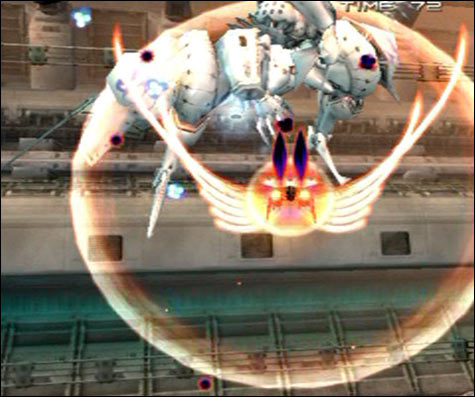
...for this Ikaruga review.

I had never played the game before, but I came away impressed, if not enthralled. Very few games fit neatly into just one of the categories I named in the New Taxonomy of Gamers series, but Ikaruga is the quintessential perfectionist game. It requires you to do the same thing over and over again as you improve only incrementally. If you find yourself able to beat it on hard mode without dying, you can upload your video to YouTube and even get mentioned in reviews! To me, the reward's not worth the effort. But I understand the temptation to master something like this. It puts you in elite company.

Still a cool game, though. I'm glad I finally played it after all this time.

Monday, April 28, 2008

All aboard the hype train! Last stop: Liberty City station

I don't know how great Grand Theft Auto IV is, but I do know this: After today, people will finally stop telling me how great it's going to be. That ranks a 10/10 on any scale.

Don't get me wrong -- I am looking forward to playing GTAIV. But there is something strange about the culture of hype that is so much a part of the gaming community. No matter how many times we get burned, we're still willing and eager to bestow "game of the year" status upon something we haven't played. We pass along screenshots, trailers, and preview pieces from the enthusiast press as though we had no idea they might be cooked. We don't consider the possibility that all these press materials are made available for the publisher's benefit, not the consumer's. It's a lesson we never learn!

Variety's video-game blog, "The Cut Scene," has a post about the troubling implications of the exclusive review, which is as pernicious a part of this process as any. The first American outlet to post a GTAIV review was IGN, which awarded it a rare 10/10. I am not surprised that the only people to have posted reviews of GTAIV prior to this weekend gave it perfect scores (besides IGN, a few European outlets gave it a go). The same thing happened last year just before Assassin's Creed was released. The Metacritic score was in the 90s until the embargo lifted, and then it dropped over ten points.

An even better example (cited in the Cut Scene post) is that of Game Informer's world-exclusive Mass Effect review. The magazine gave the game a 9.75/10, while still noting its myriad flaws. As I wondered at the time:
...what was Game Informer reviewing? The Mass Effect in front of them, or the Mass Effect they expected to arrive in stores months later? Were they willing to overlook certain problems to secure the exclusive? Were they willing to furnish a certain minimum score?

After scans of the Game Informer review popped up online, they were breathlessly reposted in a (non-game-specific) message board I frequent. I pointed out the offending paragraphs about poor AI, play control, and so on, and was told, essentially, to STFU. I felt no joy when the game turned out to be terrible, for all the reasons that Game Informer danced around.

Now, here we are again, doing the same dance with Grand Theft Auto IV. Posting screenshots. Relaying each new review as it's posted. Strenuously arguing the merits of one console version or the other. Strategizing to acquire the game at a midnight launch, as though it will rot like an avocado if not consumed immediately. Maybe it will deliver on the hype, but that would make it one of the only games ever to do so.

I'm not saying anything that people don't already know. What's strangest about a game with this level of hype is that everybody knows what's happening, and they don't care. They enjoy it. There may even be something genuinely helpful and positive about games that act as a communal touchstone, particularly when they grab the attention of casual gamers or non-gamers. But a mob mentality is always troubling, no matter what the context. There's little harm in forum wars, really, but the mindset is one that any individual should strive to avoid.

Look at it pragmatically. If you convince yourself that something is going to the greatest game ever, then the best-case scenario is that it meets your expectations. More likely, the game will fall short in some way. That's no way to live. To me, nothing is better than being gobsmacked by some under-the-radar title that I had no expectations for, positive or negative.

Of course, that's not so easy with games as it is with other media. At $60 a pop, blockbuster games have an almost prohibitive barrier to entry. Imagine if the cost of a movie ticket were proportional to the budget of the film. It would cost ten times as much to see Iron Man as it would to see Son of Rambow. But that's not the case. As a result, people can afford to take a chance on something unknown, without any marketing muscle behind it. With games, though, the cost of development is passed on to the consumer. Despite a burgeoning indie scene on Xbox Live Arcade, and a vibrant one on the PC, in the world of consoles people are going to save their money for the sure thing.

It's a shame, really, and it's one of the areas in which games still can't measure up to other popular media. Despite the massive revenues the video game industry pulls in, much of that is still due to the price of software and not its ubiquity. It's much more expensive to blindly buy an Xbox 360 game than to pick up a book with an interesting cover, or download an MP3 by a band with a funny name ("Echo and the Bunnymen? I've gotta hear this!"). If buying a new game potentially means throwing away sixty dollars, then you can't blame people for not wanting to take chances. And you can't blame publishers for focusing their efforts on hype instead of gameplay.

Thursday, April 24, 2008

Reconciling the irreconcilable


The story I've been alluding to for over a week now has been posted at thephoenix.com: "Sex, violence and video games." In it, I look at the merits of a few recent controversies, including the ever-present Grand Theft Auto criticism, the Mass Effect "SeXbox" flap, and, of course, the Resident Evil 5 trailer. I also take the community to task for often acting as their own worst enemies. The crux of the argument is that gamers need to be repping themselves better in the discourse, making a real effort at empathy:
The less-helpful commenters accused [critics themselves] of racism, of creating a racial divide where previously there was none. They decried an assault on Capcom’s right to free speech. But the question wasn’t whether the game’s Japanese developers had intended any racism (cultural ignorance is a commonly invoked defense among gamers), or why nobody had complained before when Resident Evil zombies had been predominantly white. It was whether those claiming free speech in defense of divisive games were willing to extend the same rights to those whom the games offended.

I also made one more attempt at demolishing the "just a game" defense.

To spend the bulk of your time and money on a hobby that can be dismissed with a wave of the hand would require an act of cognitive dissonance. Some games do have the potential to be transformative experiences. Talk to Final Fantasy VII fans about the grief they felt when Sephiroth killed Aeris. Ask a few BioShock players whether they saved or harvested the Little Sisters, and why. Such indelible moments may be rare, but they give game developers something to strive for. And they give gamers hope that the next game we play will also engage us intellectually, emotionally, and morally. I can think of no more belittling way to discuss this medium than to ever call something "just" a game. So let’s scrap that argument.

Think it'll take? Me neither.

When I began this piece, I had intended to lay the hammer down. This was to be the last word on the subject, and the spark that ignited countless fanboy epiphanies around the world. But that's not how it ended up. It is, perhaps, a good place to start, presuming that angry mobs don't do their best to prove my point. I would love to know what people think.

P.S. It's the cover story in this week's print issue, which is exciting. Pick up a copy, if you're local.

P.P.S. Also check out the brief sidebar, "Not-so-great moments in video game controversy." Nothing new or particularly illuminating, but that stuff's always good for a laugh.

Wednesday, April 23, 2008

A two-pronged Hump Day assault

It is apparently the law that all games bloggers must link to Zero Punctuation, so let me say how much I enjoyed this week's review of Super Smash Bros. Brawl. Yahtzee certainly has the courage of his convictions. I was gratified that he shared many of my sentiments about the game -- except his jokes were much, much better.

After I watched the episode, I revisited my own review to see where we'd overlapped, and found that a helpful reader had commented:
the writer of this article obviously has no knowledge of video games. if you are thinking about getting this game get it, it is a contender for game of the year. hopefully this joke of a review doesn't count on metacritic. PS. i suggest you find another career, seeing as you clearly suck at this one.

Sadly, it's true: My reviews don't count on Metacritic.

Also, via Andrew Sullivan: Move over, Power Glove! Emotiv Systems has introduced a mind-reading game controller. This page is woefully short on specifics, but I, for one, welcome the ability to remove my stupid, stubby thumbs from the play-control equation.

I wonder how heightened emotions would affect your digital mind waves? I get angry pretty quickly when I'm losing. If I were to try to use this to play something like Unreal Tournament, my character would soon start committing suicide upon respawning, just to save time.

Tuesday, April 22, 2008

The practical side of gaming green


Today is Earth Day, and, accordingly, I've seen a few sites link to 1Up.com's "Gaming Green" article. Being a naive liberal, the environment is fairly high on my list of concerns, but I can appreciate that some well-meaning people sincerely believe that things like global warming are a plot dreamed up by Al Gore in order to enslave God-fearing Americans and create a wacked-out leftist dystopia. So let's sidestep the political considerations for a minute, and see if applying some of these lessons can help you in your daily life without forcing you to help turn America into a worker's paradise.

You've probably noticed that most electronics these days are always on. In fact, that's touted as a feature in things like the Wii, which can download updates from the web even when in standby mode. In my little corner of the office, where I do all my gaming, I've got the following electronics sucking juice constantly:
  • Wii
  • PlayStation 3
  • HDTV
  • Computer
  • Monitor

Even though each one draws little power by itself, multiplying all of them by 24 hours a day adds up. Then consider the living room, where the TV, DirecTV receiver, and DVD player are all doing the same thing. Add the cell phone, iPod, and laptop chargers that all pull down their own voltage, and suddenly you see how much power we're using for no real reason.

Last summer, we made the decision only to plug in our chargers when we needed them, and to connect the majority of our electronics to power strips. Now, when I'm not using the PS3 or the Wii, I cut the power to both, as well as my TV. When we're not watching anything in the living room, we turn that power strip off. All it took was the negligible initial investment in the power strips, and the presence of mind to switch them off when we leave the room. It's not hard.

The result has been a reduction of as much as $30 to our monthly electric bill. That's $360 a year! In gaming terms, the energy savings could buy me six games. Or an Xbox 360 Pro. Or more than seven years of Xbox Live.

I only wish I'd started doing this sooner, and not just for the financial and environmental benefits. If you remember, the Wii had problems overheating when left in Connect24 mode for too long. Because I had it running in standby mode for several months at a stretch, I now get graphical artifacting. Had I been cutting the power completely during that time, it would still be working perfectly.

So if you don't want to do it for the environment, or if you're tempted to spite Al Gore and his nanny-state cohort, then do it for me.

Wait, that's not right. Do it for your wallet.

Totilo scoops Krpata

Well, no reason to link my Phoenix piece now that Stephen Totilo has written essentially the same thing. Curse the lead time it takes to publish on dead trees! You'd almost think that this "internet" thing is leading to the demise of newspapers as we know them.

Still, it's good reading, and of course I endorse Totilo's sentiments. I would expound more on the subject, but I'll be flinging 2400 words of my own at you within the next couple of days. Suffice it to say that you kids are in for a talking-to!

Monday, April 21, 2008

Conflict resolved


If you've been keeping abreast of my Twitter (that sounds filthy!), you'll know I had a slight incident over the weekend involving my ankle, a game of ultimate frisbee, and a strategically placed hole in a field. I was leaping to cover somebody on the opposing team and landed in a ditch. My right ankle made two distinct popping noises that were audible at least twenty feet away, and promptly swelled up like a balloon. I spent the rest of the day with my foot propped up, applying ice periodically. The swelling's gone down a bit, although the bruising would likely make you gag.

But it's not all bad. I took the day off, and as a result finally had time to polish off Crisis Core. As usual with these games, the final boss battle was a little disappointing. I don't like my games too difficult, but it seems like if you spend even the slightest bit of time leveling up, the last boss comes off as a chump. Still, the actual fight wasn't the true conclusion of the game -- it was followed in short order by a heartbreaking playable sequence that I was hoping would never come. Made me want to play Final Fantasy VII again right away.

But for real now, Squeenix, what's the score on FFXIII? Kick-ass portable games are all well and good, but my hopes have been fully re-energized for a full-blown PlayStation 3 version. Maybe my ankle will even have healed by the time it's out.

Friday, April 18, 2008

Friday links

Still hard at work on that piece for the Phoenix, so it's been tough to devote full-time energy to blogging this week. But I've read some interesting stuff that's too good not to share.

-If you want your brain broken, Dan Bruno at Cruise Elroy is writing a multi-part thesis on the music in Legend of Zelda: Ocarina of Time. This is an insightful, illuminating series that shows how many different ways there are to go about analyzing games. And it shows how important it is to learn about things besides video games as a way of actually increasing your ability to enjoy games. Very cool.

-The Brainy Gamer is putting together a syllabus for a course on electronic RPGs. Although it's a bit past time to enter your own suggestions, I highly recommend reading the comments thread on the original post. As someone whose experience with RPGs is limited to the Final Fantasy series, with one detour into Chrono Trigger, I was amazed at the breadth of the genre, and by the passion of the commenters for their favorites. Someday, when I'm independently wealthy and retired, I'm gonna play Planescape: Torment.

-This week marked Leigh Alexander's debut as Kotaku's associate news editor. Her first piece was a look at the strife surrounding the EA-Take-Two merger. It's nice to see this kind of long-form, hard news on a game site. It's the kind of thing you might occasionally see in the Times or the Post, but it makes sense that a site like Kotaku should be leading the pack here. I'll look forward to more of this. Also, other people doing real journalism means I can continue never leaving my house.

-Apropos of the question of race in games, Matthew Gallant is posting an essay about race and rock 'n' roll in the 1950s. It's always easier to see this stuff as an historical artifact, but there's a lot of relevance to today's culture. 50 years is not a long time.

-Bill Harris on how the Resident Evil 5 trailer should have been done.

-Magical Wasteland feels sympathy for games writers. Part of what makes blogging great is that you're not beholden to publishers or PR folks. And I can't say how grateful I am to be reviewing games for a publication like the Phoenix, which doesn't depend on ads from game companies and therefore gives me wide latitude to bash a game if I need to. On the other hand, I certainly don't have any "access, favor, or discretion," to borrow from Deadspin. The guys at Gamespot and IGN must be walking a tightrope at all times -- Matt Cassamassina needs those chummy Perrin Kaplan interviews. I also nearly jumped at a chance to apply for one of those Gamespot positions recently, before I realized that I didn't want to work 60-hour weeks. One game a week is all right with me.

-Not games related, but I've been reading Parallel Worlds by Michio Kaku, and it's alternately thrilling and terrifying. The universe (multiverse?) is a strange, strange place.

Wednesday, April 16, 2008

Zack attack

On a cheerier note, my review of Crisis Core: Final Fantasy VII is up now at thephoenix.com. I can't recommend this one highly enough.

I'm actually still trying to finish it. I put just about 20 hours into the game for the review, but I keep getting sidetracked by the missions. There are a few in-game side-quests to undertake, but the bulk of them are menu-driven: at a save point, you just select the "missions" option. While I'm not sure just how many missions there are, it's got to be in the hundreds. I think I've spent the majority of my playing time on them and I think I've only recently crested 40% completion.

Yesterday I made the mistake of taking on the mission with 1,000 Wutai soldiers, which took over an hour and ten minutes. It wasn't hard, particularly once the DMW gave me no MP cost for the duration, but the lack of difficulty almost made it more boring. And then my reward was "Mug" materia, which I am sure not to use. (Frankly, I've barely deviated from a mix of Fire/Blizzard/Thunder/Cure/MP Up/HP Up since I started, and it's served me well.)

But I'm just bitching because I thought I'd make more progress toward the main storyline. One thing I've always loved about the Final Fantasy series is how they can tell these tales about the end of the world, but the real drama is essentially between the main characters. You don't fight the bad guys just because it's the right thing to do, but because you need to put right some personal conflict. And it usually works. Certainly works here.

Tuesday, April 15, 2008

It's not just gamers

Lest you think the majority reaction to the Resident Evil 5 trailer is unique to the gaming community, Ryan pointed out the latest column by the ESPN ombudsman. She's discussing reader feedback when issues of race and sports intersect:
From my earliest days on this job, I noticed that whenever race was introduced into the discussion of sports -- whether on TV or ESPN.com, whether through polls, town hall specials, opinion shows or columns -- I would receive mail accusing ESPN of fueling or even creating racial divides in an attempt to drive ratings or page views.

The first time I noticed this reaction was in the weeks surrounding the 2007 Super Bowl, when I read mail from viewers who thought ESPN had made too much of two black coaches leading teams to the NFL championship game. That so many viewers thought ESPN was making a big deal of nothing surprised me greatly, because from the vantage point of my advanced age, this historic first was unquestionably a big deal.

I didn't know whether to feel encouraged that younger fans thought race was a nonfactor, or discouraged that history I still think of as recent and relevant seemed so ancient to them. At the time, I wished ESPN had presented more context for understanding the significance of this first.

Substitute everything about the Super Bowl with Resident Evil 5, and you basically have what we've been dealing with recently. On one hand, I'm a bit relieved that these sentiments aren't confined to the gaming community. We're not uniquely oblivious. But on the other hand, it's probably worse that it's so widespread.

Let's not overlook the generational component to this. Far from wanting to have an open, national conversation about race, it seems the younger generation wants to ignore the very idea of race itself. This is probably a better attitude than some that have prevailed in the past, but it's still not, you know, a good thing.

In the past week, I've read numerous thoughtful and sensitive posts about RE5 and racism more broadly, but Leigh Alexander made one point that I think is especially worth repeating: "Racism attacks differences; tolerance embraces them. The idea that tolerance means we're all utterly the same is fallacious; progress means to value equally the unique experiences of different cultures or ethnic groups."

We can't sweep under the rug the uglier parts of our shared heritage. We shouldn't. We should learn from them. To go back to that ESPN.com column, the ombudsman started off by talking about the uniformly positive praise she'd received about a documentary ESPN had produced called Black Magic, which was about black college basketball in the civil rights era. For whatever reason, when it was presented in a purely historical context, viewers did not accuse the network of "playing the race card" or seeing issues of race where none existed. Yet they're so certain that anybody who speaks about racial issues today is doing the same thing. Why?

The ombudsman seems to get to it in her conclusion:

The harsh reality is that unless ESPN's handling of race-related issues is near perfect, as it was with "Black Magic," it is not likely to get credit for trying. ESPN will keep encountering a phenomenon that has been dubbed "white fatigue" -- an impatience that wishfully equates issue-exhaustion with issue-resolution.

It should not take an elaborately researched two-part, four-hour, commercial-free primetime documentary to remove the rancor from the discussion of the intertwined history of sports and race in America. Columnists should not have to face "fire her" campaigns for trying to connect the dots between past and present. ESPN should not have its motives impugned every time it falls short of perfection on racial matters. The bar is set too high. The only alternatives are to clear it or take the lumps trying. Walking away from it is not an alternative.

Very well put. I think we face this same choice. As I said before, this controversy isn't going away. How we choose to deal with it will say a lot about who we are as a community, and could mark a real chance to elevate the status of games in popular culture.

As fate would have it, I've been working on a long-form piece for the Phoenix about videogame controversies, and the re-ignition of the Resident Evil 5 firestorm has meant that I've been thinking and writing about this non-stop for about a week now. I look forward to sharing this story when it runs in another week or two, but until then, I hope this is the last I have to say about it.

I mean, we're supposed to be having fun here, too.

Monday, April 14, 2008

Gamestop.com User-Submitted Previews: Grand Theft Auto IV, Part 2

Can you feel it? The murmur of fanboy excitement building to a roar... The Internets alight with world exclusive preview information and the official OXM review (10 out of 10!)... The veins throbbing in Jack Thompson's forehead...

Yes, we are but two weeks away from the release of Grand Theft Auto IV. I already looked at the user-submitted previews for this game once before, but since then a bevy of brilliant new ones has surfed the wave of fan excitement onto the welcoming shores of Gamestop.com. I couldn't resist one more go at it.

(Also, uh, I got halfway through writing the post before I realized I'd already done it once before.)

Gamestop.com user "playerofgames" reminds us, apropos of the Resident Evil 5 controversy, that all games and gamers really are colorblind:
I am hoping for the best. In the previous although i enjoyed them i just felt like a block person running around doing pointless missions. instead of completing the campaign i spent all my time just killing cops and hookers.

Maybe I'm just a reverse racist and I'm choosing to look at issues of color where none exist, but, uh... did he mean to type "black" person right there? I really want to know. Maybe "block person" is a really term I never heard before right now.

"BIOCOMMANDO" is also skipping gleefully through a post-racial utopia:

Okay Rockstar has been making crappy GTA games lately! GTA3 was amazing, VICE CITY was the best game ever! Liberty City Stories and Vice City Stories had no point first of all they were the same as there originals just with different stories and main characters, but that is an obvious one! San Andreas was the lamest game ever; I wanted another quality game not a 50 cent style stupid gangsta rap game. That totally ruined it for me, it went from high class mob to low end petty thug style to appeal to today’s modern teenage pop culture and its stupid yo yo gangsta rap phase! Now they want to make a new game with this balding old out-of-shape eastern European guy with the strongest accent! HOW AM I SUPPOSED TO RELATE WITH THAT?

Most of the new comments are more sophisticated than that. In fact, they're suspiciously highbrow. "a customer" writes:

The best thing about the new GTA is how it actually has literary themes. Of Mice and Men comes to mind. I foresee the best GTA plot yet. And not to mention, everything else.

In the previous post, Johnson commented that some of these might the product of marketers trying to drum up viral support for the game. I wonder if the above commenter was trying to preemptively block any Thompson-esque criticism of GTAIV. Also, I have to say, of all the books that come to mind when I look at this game, Of Mice and Men ranks somewhere beside Don Quixote and In Search of Lost Time.

Speaking of Proust, if you thought he digressed much, check out this comment from "metallink666":

saints row was a fun game but it never captures theth magc of gta in interesting characters awesome story (i sure hope this one has custumization new clothes tats new haistyles i loved that from gta san andreas) the coolest part is how liberty city is modeled after the atual nw york and finally we get decenttargettina gameinformer said i would be similar to crackdown so killing pedestrians will bemore fun. when i found out gta4 was coming out same day as the ps3 version that moment i became anti-playstation killzone 2 it might not even be good he first game suckd and im nota stealthactionfan so mgs s out for e too uncharted is good but with its short length and low replay value make it a rent and ratchet and clank on the easy side so a good game for kids all the ps3 has going for it is basically resistance and haze may be good and i've had problems with shooter controls on the playstation in the past so you see why im against the ps3.

He, uh, he was talking about Grand Theft Auto IV at one point, right?

One last lit note. I submit that you will not find a better use of analogy anywhere* than in this comment by "Gta 4ever":

one gta4 is not gta3 in hd. no, this time liberty city is a exact recreation of new york well the famous parts. saints row sucks compared to gta, its like having kratos(gta) fight a telytuby(saintsrow).

Why, that would be no fight at all! But Kratos against all four Teletubbies -- now you might have something.

"YNSR Smith, K." is more levelheaded than most:

honestly, i dont have a positive or negative thing to say about the game since it didnt come out. all i know is that i preordered my copy and im patiently waiting for april 29th to roll around.

Let me address you directly for a moment, YNSR Smith, K. I appreciate your honesty here. It's probably the smartest thing you could do, reserving judgment on the game until you've played it. But do you have any idea how hard you're making my job right now? Come on, at least tell me that Saints Row sux tha coq or something.

To cap it off, this installment's winner for best fanboy meltdown goes to "Evolution":

Man Rockstar are a bunch of sell outs how can they sell Grand Theft Auto 4 (the biggest title to grace a sony playstation ever) to the X-Box system? the Playstation 3 is a much more powerful machine for gaming its like the Alienware of console video games and they are more then likely going to make 1 version of the game and they will be forced to make the graphics 360 friendly. GOD i hate the 360.

I've heard about rock stars selling out before, but this is ridiculous!

Yes, I'm willing to go out on a joke that weak.

*Anywhere on Gamestop.com, I mean.

Friday, April 11, 2008

The best cinematics ever

Well, okay, not the best cinematics ever -- just some of my favorites. I'm sure I'm missing tons of great ones. But this is the kind of thing you post on a Friday, right?

Chronologically (These are spoiler-heavy, so beware):

Ninja Gaiden (NES, 1989)


This is the first memory I have of the honest-to-goodness cinematic opening to a game. I love everything about it: the close-ups, the extreme widescreen, and especially the music. This kind of thing wasn't common when Ninja Gaiden came out. It was mind-blowing.

MechWarrior 2 (PC, 1995)


This played right as you booted up MechWarrior 2. I liked the game all right, but I must have watched this sequence -- estimating conservatively -- a hundred million times.

Resident Evil (PlayStation, 1996)


OH SHIT IT'S A ZOMBIE

Final Fantasy VII (PlayStation, 1997)


This is the most famous sequence in the game, although another great choice would have been Sephiroth vanishing into the flames of Nibelheim. I knew this moment was coming when I finally played Final Fantasy VII in 2003, but it was no less powerful for that. It's so strange to watch this now: I remember seeing commercials for this game and thinking that the FMV looked real.

Metal Gear Solid (PlayStation, 1998)


Metal Gear Solid is essentially one long cutscene punctuated with bursts of gameplay, but when they're done this well, who cares? Each foe Snake vanquishes gets a big, dramatic death scene, but Sniper Wolf's was always my favorite. I think I like the contrast between Snake's reaction and Otacon's. "I don't have any more tears to shed" is such a good line.

Shadow of the Colossus (PlayStation 2, 2005)


Watching this now, the moment doesn't seem so dramatic, but at the time I actually yelled, "No!" Shadow of the Colossus does such a wonderful job creating an atmosphere of loneliness and desolation. Agro is your only companion -- almost the only sign of life in the whole world -- for 90% of the game. And then this happens, like a punch in the stomach.

The Darkness (PlayStation 3 and Xbox 360, 2007)


This may not technically count as a cinematic, because it happens in-game, but considering that you don't control your character I think it passes the test. This is just one of the bleakest and most horrifying scenes I've ever encountered in a game, completely unleavened by irony or comic relief. Its impact is heightened by the scene earlier where you and Jenny sit on the couch together watching To Kill a Mockingbird. I wanted to kill the hell out of Uncle Paulie after this.

Post links to your favorite cinematics in the comments!

Thursday, April 10, 2008

N'Gai speak

You listen.


Look: This Resident Evil 5 controversy isn't going away. The sizable segment of the gaming community that wants it to be simply a non-issue will not find their wishes granted. In fact, N'Gai is more charitable than I am to those who took the post-racial approach to the issue:
There was a lot of imagery in that trailer that dovetailed with classic racist imagery. What was not funny, but sort of interesting, was that there were so many gamers who could not at all see it. Like literally couldn’t see it. So how could you have a conversation with people who don’t understand what you’re talking about and think that you’re sort of seeing race where nothing exists?

I considered it a willful blindness -- but even if it isn't, it's still a blindness. I think it's important for people to make an honest effort to understand better the complaints that Resident Evil 5 is going to get. It's possible to defend both the content of the game and the rights of others to be offended. "Shut up" is not an appropriate or helpful response to somebody who finds this imagery troublesome.

My thoughts haven't changed much since I opined about the trailer last summer, and N'Gai echoes some of them in the Multiplayer piece. I don't think it's necessary to rehash them here. So without going into the specifics of RE5 once more, I just want to make this general point:

Art has always been controversial. Art that challenges the status quo comes under fire from one side, and art that tries to maintain it gets criticized from the other. The conversations we have as a result of this will help to determine what we want the status quo to be, and in turn move the culture forward. Overtly racist portrayals of non-white characters used to be commonplace in American films and TV shows, until people got fed up and said enough is enough. We've made progress.

But there's this strange temptation to assume that we've arrived at a point in history where we've made it past all this stuff, despite the abundance of counter-examples. Forget about RE5 for a second: consider the Cole Train, or the "bizarre b-boy timewarp" of Unreal Tournament III. Why were those character choices made? What was the thinking (or lack thereof) behind them? What does it say about us when we don't notice racial stereotyping, either explicit or implicit? That it doesn't exist, or that we're trying to wish it away?

Art may only be a mirror to the culture that produces it, but it's important for us to look honestly at our reflection from time to time. Either you think video games belong in this conversation, or you don't. I do.

Deep thought on Battlefield: Bad Company

I am not interested in playing Battlefield: Bad Company.

(Background reading here, here, here, here, here, and here.)

Wednesday, April 09, 2008

Insult Swordfighting levels up

Yesterday, this blog was featured on N'Gai Croal's Level Up, in a post titled "The Big Idea." It was the second in a presumably ongoing series about how we self-identify as gamers (or don't, as the case may be). N'Gai linked to the "Taxonomy of Gamers" series, and had some kind words to say about it. He's sort of the spiritual leader of a certain class of games blogger, so to get his seal of approval is flattering.

It's been interesting to see the discussion develop around the community in recent months. It seems that many people agree that the terms we have now aren't getting the job done, but their solutions vary wildly. That's a good thing. It's a conversation we need to have. As I've said, it's not so much coming up with the perfect nomenclature as it is identifying the elemental reasons we play. We just need to know what those are. The danger is that if we don't define our own identities, others will do it for us. We may not like what they come up with.

Tuesday, April 08, 2008

It was a graveyard Smash

My curmudgeonly review of Super Smash Bros. Brawl is now up at thephoenix.com. Barring any unforeseen circumstances, like my Wii cheerily glowing blue to indicate a new message from Nintendo HQ that threatens my life, this post will probably be the last I have to say about it.

For all that I've already written about Smash Bros., I think the end of the review comes closest to the core of what I'm trying to say. The game derives all of its appeal from classic Nintendo games, but it doesn't give anything back to those games. This may be the sort of distinction that's clear only within my own mind, and makes no sense to anybody else. I'll try to explain, one last time.

When I play a game, especially a good game, I want to surrender myself fully to the world it depicts. I want to play make-believe for a few hours. In a strange way, Hyrule, Zebes, and the Mushroom Kingdom live on in my memory as places I've actually been, where I did things that actually mattered. This isn't to say that I can't tell the difference between fantasy and reality, only that the experience of playing a great game is one of displacement. Smash Bros. pops that bubble.

The obvious objection is that Smash Bros. is intended to be played multiplayer, which is true. But online play without headsets may as well be single-player. These days, I can't necessarily get a group of living, breathing people together to play on short notice. I did play two-player Smash Bros. with a friend of mine, though, and we had a pretty good time. The question I always ask my critic self in these situations is this: Am I having fun because I'm spending time with my friends, or because we're playing this particular game? It's usually the former.

I am willing to accept that I'm probably just off-base in some fundamental way on this game, and that's okay. It's not something like Mass Effect, where I'm pretty sure I'm taking crazy pills. I'm glad so many people are playing and enjoying Smash Bros., because anything that gets people playing and discussing games is a net positive as far as I'm concerned.

Monday, April 07, 2008

Today's must-read

MTV Multiplayer's Jason Cipriano has a good scoop: an interview with the owner of the world's only copy of an Atari 2600 game called Gamma Attack. The collector, identified only as "Phantom," posted the item on eBay for $500,000, and in the interview claims that he did so only to raise publicity for the item. He's holding onto it for now.

It's a fascinating read for several reasons. Not just because, if legitimate, Gamma Attack is a curio like few others in the retro scene. But I'm also interested in the look at the inner workings of the collectibles scene -- one I'm not familiar with. Like you'd find in any niche, it sounds like collectors are narcissistic and hyper-competitive. Someone could probably make a King of Kong-style documentary about these guys.