We had a big rainstorm here yesterday. When I walked into my local Gamestop, soaking wet, I said, "Ironically, I'm looking for Heavy Rain." The employee did not laugh. Foiled again!
-The PAX schedule has been announced! Lots of interesting stuff on there. Having not been to this kind of thing before, I'm not sure how early I need to show up at the panels I want to see, though I'm suspecting they won't be the most popular ones. I'm instinctively passing over things I know will be heavily attended, like the PA panels and the keynote, but I don't want to miss the journalism panels. I'm already building a stockpile of spitballs to throw at Croal and Totilo.
-Sparky Clarkson has one of the most cogent takes I've seen about why No More Heroes 2 is diminished by not having an overworld. Speaking of the first game's rendering of Santa Destroy, he says "the city serves the purpose of the game. It creates a sea of banality for Travis (and the player) to escape from into the vibrant world of the assassin rankings. The city helps to characterize Travis as a loser. And the city says something interesting about other open-world games." That's dead-on. And without that counterpoint, the sequel doesn't seem nearly as savagely satirical.
-I gave up on Modern Warfare 2 long ago, for many reasons, but I still appreciated L.B. Jeffries' rigid analysis of MW2's multiplayer map style. His key insight: in this game, the map is a weapon. That certainly explains my uncanny ability to get shot by opponents I couldn't see.
-I'm only a few hours into Heavy Rain at this point, and I have to say I'm enjoying it quite a bit. Despite its healthy Metacritic score, I've been surprised both at the volume and the ferocity of the criticisms I've read of the game on message boards, blogs, and Twitter. One of the more balanced criticisms comes, naturally, from the Brainy Gamer, who says that he finds Heavy Rain to be at cross-purposes.
I think there's room to like or dislike the game, and plenty of complaints to make about it, but frankly I think a lot of the complaints I've read -- not at the above link -- are misguided. I'll say more about that next week.
Friday, February 26, 2010


Wednesday, February 24, 2010
Sister act

My review of BioShock 2 is up now at thephoenix.com. Games like this are fun to write about because they're really about something, and you can engage them thematically in a way that everybody will understand. Tom's point about emphasizing the "game-ness" of games hits home, but in the case of something like BioShock 2, story is such a huge part of it that I don't think you're doing readers a disservice by focusing on it.
Especially in the lead-up to Heavy Rain, it's been interesting to me to see how many people instinctively resist a game that emphasize story over play. Saying games have to be one thing or another seems to me to ignore the best thing about video games, which is how broadly they can be defined. You could write a review of BioShock 2 talking only about the story. You could write a review of it talking only about the gameplay. Either one could be honest and illuminating, because the game strikes a nice balance between the two, and even uses one to strengthen the other (though not to the extent of the original).
But BioShock 2 is the rare case that succeeds equally well on both counts. Most games land on one side of the divide. I think that's okay. The spectrum of games that has pure play on one end, and pure story on the other, is a long one indeed, and I don't think we should be trying to shorten it. A game with a great story may not need incredible game-ness, and history is full of examples of games with crappy stories that are still a blast to play. We can have it all!
Yet it is true that for all that I thought this game succeeded as a story, I still spent an inordinate amount of time trying to shoot people in the face with rocket spears. That doesn't really come through in the review.
Friday, February 19, 2010
Friday afternoon tidbits
Links! Getcha hot links here!
-News that Activision CEO Bobby Kotick regrets buying Red Octane instead of Harmonix is no suprise. What is a surprise is how little he seems to have thought about it at the time. Stephen Totilo quotes Kotick as saying, "We really didn't even think, 'Hey we should go to Boston, and meet these Harmonix guys and see what they're up to.'" I don't think it's with the benefit of hindsight to point out how stupid that was.
On the other hand, nobody in the music-game business is exactly flush with cash at the moment. This week, the Boston Globe reported that Harmonix may have to pay back some of the $150 million bonus they received from Viacom in 2007. The sad part about all this is that it was so obvious what was happening as it happened. There's still a strong future for music games, but the market got oversaturated, and we won't lament the loss of these excess SKUs.
-Great essay at Ta-Nehisi Coates' Atlantic blog about the politics of Bioshock and BioShock 2. Looks like somebody named "A. Serwer" wrote the post, rather than TNC himself, which I say in order to give due credit. Some of the greatest praise you can give to the BioShock games is that a post like this doesn't seem like it's overreaching to find relevance in them. I don't even have anything to add to it.
-The upcoming Game Developer magazine has a port-mortem of my favorite game of 2009, Borderlands, and GameSetWatch has kindly excerpted some of it. It sounds like Borderlands had a tumultous development, even more so than most games, so it's all the more amazing that they ended up with such a great final product. You wonder what they'll be able to do with the sequel, having laid down such a solid foundation.
-Another great Hardcasual piece this week, "StarCraft II Beta Puts South Korea in Economic Freefall." How do you know it worked? I shared it in Google Reader and somebody said he thought it was a real headline for a minute.
-Steve Wiebe has reached the mountaintop once more, setting a new world record for Donkey Kong Jr. You may remember Wiebe as the good guy in the incredible documentary King of Kong. I know a lot of people have accused the movie of playing a little fast and loose with the facts in order to tell a more compelling story, but it's a terrific film all the same.
Wednesday, February 17, 2010
From heroes to zeroes
 Above: Travis Touchdown goes for two.
My review of No More Heroes 2: Desperate Struggle is up now at thephoenix.com. You may recall that I loved the original, placing it on my top 10 for 2008, and writing numerous posts about it. Hell, let's just list 'em:
That is some glowing praise. As time went on, I even came to think that I had underrated the game, scoring it an 8.5 out of 10. Though I make it a point not to get too excited about upcoming games, a sequel to No More Heroes seemed like a no-brainer. And, well, it is a no-brainer, in the pejorative sense.
That's a little harsh, but I really didn't get that some sense of vitality and joy from Desperate Struggle that I did from the original. Even though the sequel has gotten better scores overall, 88 compared to the first game's 83, to me it didn't feel like it belonged in the same class. Oddly, I found myself making similar complaints about this game that reviewers did about the first one, and at the time I thought those reviewers were misguided.
But there's a fine line between campy and just plain bad in any medium, and in video games that line is razor-thin. Say what you will about the clunky and sparse overworld of the first game -- at least you could get where you were going. Desperate Struggle adds some of the crappiest jumping I've ever encountered, and it's not to make a point. It's because this is a sequel, and adding useless new features is what you do in a sequel. I think it's time for a new IP from Grasshopper Manufacture.
Monday, February 15, 2010
Why we need sequels
I've played four new games so far in 2010, and three of them have been sequels. I sometimes fall into the trap of complaining that publishers are too quick to pick the low-hanging fruit of existing franchises, rather than trying to establish new ones, but a well-executed sequel seems more common in the world of video games than other media. Games build on their predecessors in many ways, by taking what works and altering what doesn't. This doesn't always result in a better product, but more often than not, making a good game results in keeping one eye on the past.
Still, it's strange how some sequels that seem necessary can blow it, and some that seem unnecessary can end up feeling vital. The most interesting thing about the sequels I've played is that two of them seemed like no-brainers, and turned out to be disasters. And one of them seemed like a terrible idea, until it proved that good play mechanics will always justify a game. With sequels, as with anything, you can't pre-judge. Here's a look at what these sequels attempted, and how they fared.

The sequel: Army of Two: The 40th Day
Why it was a good idea: The first Army of Two was an uneven shooter with enough good ideas that a sequel seemed like a slam dunk. That game attempted a satirical storyline that was ballsy in its invocation of timely, real-world events, and snuck in a subversive sense of humor under the radar. But as a shooter it was only so-so, lacking big-money moments and feeling repetitive even well before its running time ended. If the developers could have polished up the gameplay, the sequel could have been a big winner.
Why it didn't work: Taking exactly the opposite approach, The 40th Day jettisoned what worked and kept what didn't. Gone was the humor, and the more overt and risky topical references. Still there were the uninspired arenas that felt articial and forced. The sequel even messed up the controls, making it next to impossible to do something as simple as heal your teammate. A sequel is a great chance to refine and iterate, but the opposite happened here.

The sequel: No More Heroes 2: Desperate Struggle
Why it was a good idea: No More Heroes could barely contain all its ideas. It was so funny, fresh, and original, you'd be forgiven for assuming that this franchise could lay golden eggs. I figured Grasshopper Manufacture could get up to No More Heroes 10 and still be surprising me. I was ready to follow this game anywhere.
Why it didn't work: Desperate Struggle ends up feeling like the contractual obligation album, delivered without much care or attention. It makes overtures to some of the misguided criticisms of the original, which diminishes it. It's funny, but not nearly as sharp or trenchant in its commentary as the original. And the addition of a new playable character that winds up not feeling so playable is just the nail in the coffin.

The sequel: BioShock 2
Why it was a bad idea: The first game was close to perfect, a single-player adventure that was artistically adventurous, philosophically challenging, and hell of fun to play. A sequel seemed like a bad idea not just because there was no way it could be as good as the original. Rather, BioShock seemed so self-assured and hermetic that it was hard to imagine how BioShock 2 could be anything but a cash-in. I mean, multiplayer? Really?
Why it worked: The world of Rapture may have been more fertile ground for storytelling than it seemed. Just being back there is a pleasure, and the new antagonist, a collectivist counterpoint to Andrew Ryan's rugged capitalist, is as good an idea as any. But the biggest thing BioShock 2 has done is remind me how much fun the first game was. In the years since BioShock came out, I've tended to think about it only in terms of the setting, story, and themes. But it was a blast to play! So is the sequel. The plasmids, the retro weapons, and the numerous combat styles are as good as ever.
Really, the notion of BioShock as this singular work that sprang, fully formed and perfect, into existence is a bit off. Though it was technically a new IP, it was building on the ideas of several thinking-person's shooters that had come out in the previous decade. In its own way, it was a sequel, too.* Almost all games are. That's why we need them.
*And the non-sequel I played, Bayonetta? Hard to argue that it could have existed with the Devil May Cry series pointing the way.
Friday, February 12, 2010
Friday afternoon tidbits
Because a links post is easier than generating new content...
-If you haven't been keeping up with Gamer Melodico, a new site led by Kirk Hamilton, one of the nicest guys on the internet, you should. This week he posted a hilarious video of Commander Shepard's anti-press tendencies. Hasn't this guy ever heard of the first amendment?
(The temptation to play Mass Effect grows ever stronger. I must resist.)
-Mike Walbridge has some advice for aspiring game writers: give up. Mike's not wrong on most of his points. It's hard enough to make any money writing about video games, never mind make a living off of it. The competition is fierce. It's a constant battle to get paid what you're worth when there are thousands of other people out there willing to work for less. And yes, writing about games changes the way you play them, which is not always for the best. It's all true.
But it's also true that if you love writing, and you love games, and you feel like you have something to say, you should say it. Maybe nobody wants to pay you, or publish you. Say it anyway. Start a blog. Write for the love of writing. It's not always easy, and sometimes the well of ideas is dry. That's okay. Do it anyway. Write when you can. Play when you can. Do it for the love of the game, and some kind of success will follow.
Just maybe get a day job, too.
-Gus Mastrapa wonders if he's too old to compete with the youngsters in online shooters. This is a great piece, ringing with truth. When I was a teenager, I put hundreds, if not thousands of hours, into Quake II Capture the Flag. It's the only game I've ever really been good at, and it's only because of the practice. That was a luxury I had back then. I don't have that luxury now. At the age of 28, I've accepted that I will never really be good at a game again. That's fine in single player games, in which you don't have to excel in order to complete them. But it does make multiplayer tricky.
It's fitting that Gus quotes Valve's Chet Faliszek, who worked on Left 4 Dead, because I've found that as I get older, my interest in cooperative experiences like L4D only grows. It's not multiplayer that I'm tired of, which is what I thought for awhile, but the grueling competition you find in the average deathmatch. What's the point? I'm old and slow, and I'm comfortable with that.
-Lately I've been playing more and more online games at sites like Kongregate, and feeling like there's a whole world I didn't know existed. For some reason I just assumed these were spammy, worthless aggregators, but it's not the case. There's some great stuff out there, most of which can be consumed in bite-sized chunks. This week's recommendation: I Remain, a point-and-click adventure set in a zombie apocalypse. It's pretty creepy.
-I hate Google Buzz. Do you hate Google Buzz?
Friday, February 05, 2010
Friday afternoon tidbits
Not two weeks after surgery, the splint came off and it's on to physical therapy, which in some ways is more painful and difficult than what was happening before. The therapist tells me that that elbow is the hardest body part to rehab, so that's awesome. You should see the huge scar on my arm, too. Anyway, links.
-Thanks to this week's post about trying to play games while injured, I was introduced to Able Gamers, a site for gamers with disabilities. They also run the Able Gamers Foundation, a charitable organization that advocates for accessibility in digital entertainment. It's an important subject many of us probably don't think about enough. To that end, I'd also recommend the Big Red Potion podcast with guest Mark Barlet, the founder of Able Gamers. Very illuminating.
-The re-launch of Irrational Games and its website has been something to see. Not only is Shawn Elliott back to podcasting, but they're releasing things like Ken Levine's recollections of System Shock 2 development. Great stuff.
-I don't think I've said this before, but I appreciated the way Assassin's Creed II didn't shy away from grappling with religious ideas, to the extent where the bad guys were actually members of the Catholic church. But, as Rich Clark points out, the game mechanics undermine any real penetrating look at the tough questions the game seems to want to raise.
-I don't play or advocate for independent games nearly enough -- or at all, really -- but I've been enjoying the VVVVVV demo. Not sure why I played this one when I skip so many others. Maybe it was Rock Paper Shotgun's write-up about the game, and interview with its creator. Either way, glad I tried it. The music is great, too.
-I'm not going on record with a Super Bowl pick, but, like most people, I'm rooting for the Saints. But really I'm rooting for myself to drink beer and eat a ton of food.
Tuesday, February 02, 2010
Playing disabled
I mentioned yesterday that I've still been able to play games despite my elbow injury. My hand is free and works just fine. The only real problem with an Xbox or PlayStation controller is that, because my elbow is immobilized, I have to sort of twist in my seat in order to bring my hands close enough to hold the controller. But it doesn't impact my ability to play the games, as far as I can tell.
Oddly, the only system I'm struggling with is the one allegedly for non-gamers, the Nintendo Wii. The Wiimote-nunchuk setup has one big advantage -- the cord that attaches them is long enough that I don't have to contort myself in order to hold everything. But it also has one big disadvantage, and that's motion control.
I've been playing No More Heroes 2, which controls like an ordinary third-person action-adventure in most respects: move with the analog stick, attack with the A button, target with the Z button. But because it's a Wii game, there are of course mandatory motion-controlled moves, and I'm finding them impossible to do. Specifically, Travis Touchdown can do pro-wrestling-style finishing moves to his opponents, which are both devastating and hilarious to watch. To do so requires quick movement of both the remote and the nunchuk -- move them both upward, say, or move them apart quickly.
Well, this is out of the question for me. I've always found the motion sensitivity of the nunchuk to be a little hinky anyway, and without the ability to really whip it in the right direction, it's all but useless. This has resulted, sadly, in Travis diving at his opponents, missing, and ending up sprawled on the ground. I can at least perform the more common, remote-only motion controls with my right hand.
I will eventually recover, but this has made me think about the plight of disabled gamers. Game inputs can be either complex and intricate, as on modern-gen game pads, or they might require strong, gross movements, as with the Wii or with peripheral-based games like Rock Band. Imagine being physically unable to play a game, or a whole genre, because the controllers don't account for your existence.
Has anybody out there had to cope with a physical disability in order to play games? I'd love to hear about it.
Monday, February 01, 2010
"Rise from your grave."
 Above: Got to keep on risin'
Hello! It's nice to see you again. I've been through a hell of a couple of weeks here, but I think I'm ready to get back to work. Before I do, I thought I'd share the story of what happened. Gather round.
The slogan is "Mountain skiing, minutes away," and Wachusett Mountain (the inspiration for the new horror film Frozen!) really is that convenient. It's about half an hour from my in-laws' house, so I make it a point to head out there every time my wife and I visit. It's not much of a mountain -- about a thousand feet vertical, and not too many trails. Still, it's better than anything else nearby (we have some truly embarrassing ski areas around here). I went to the mountain on January 16, which was an unusually warm day, with temperatures reaching into the mid-40s on the mountain.
I'm still learning how to snowboard, but that day I was feeling as confident as I ever had. I was taking on everything. I rode black diamonds with ease. I took a narrow side trail that's rarely open. And I did it all under control. It was feeling like a breakthrough.
But it was also very busy, thanks to the sunny day and the lack of other options in the area. My buddy and I waited sometimes 20 minutes for a lift, and sometimes the trails were so congested that I had to pull over and wait for things to clear out. Worst of all, the thousands of ski and snowboard edges were cutting up the surfaces. By mid-afternoon, as the sun disappeared behind the mountain, the runs were bumpy and choppy. My board skipped off the surface a few times. Still, I felt good.
Around 3:30, with the place in shadows and the snow starting to harden, we went back down a trail we'd done successfully a few times before. My friend is a more experienced and confident skiier than I am a rider, so he'd tend to outrun me, then stop and wait for me. He was nowhere nearby when I made a turn to my right, shifted my weight to turn back to the left, caught my back edge, and went down hard.
I knew something was wrong because of the sound more than the sensation. I heard my elbow snap like a dry branch. I ended up lying on my chest, facing downhill, with my arm sprawled out behind me. I was afraid to look, imagining my arm hanging by a flap of skin. Fortunately, I could move my fingers, so I thought it couldn't be all that bad.
A couple people stopped to help, and before long a competent and humorless ski patrol guy had arrived. He put my arm in a splint and bundled me onto the sled. On the way down, I saw my friend, who had stopped and taken off his skis (he told me later he had attempted to hike back up when I didn't appear after a few minutes).
I sat in the mountain's clinic for about 45 minutes while we called my wife to come pick me up. I was thirsty and asked for water, but the guy said no, in case I had surgery. This would be a recurring theme -- people who weren't allowed to diagnose me, but knew exactly what was happening, would make vague and dark comments about how bad it was.
"You got a doozy there, bud," said the triage nurse.
"So this is the guy with the lovely x-ray," said the nurse practitioner.
But the best was the x-ray technician. After I nearly passed out in the x-ray room, I said how thirsty I was and how badly I wanted some water, but nobody would let me have any in case I needed surgery. "Well, we'll see," she said, as she went into the other room to take the next picture. When she came back a moment later, she said, "Yeah, you're not gonna eat or drink anything."
I was in the hospital for five or six hours, and about three hours before I got any pain medication. The doctor told me he was unable to perform the necessary surgery. We went home instead. Despite all the phone calls we'd make to various doctors over the next two days, it wasn't until the following Thursday that I actually got the surgery I needed. I spent the intervening five days with my arm in a sling, popping painkillers, and feeling the bones move around every time I did.
Surgery went well, and by that weekend I felt comfortable enough to pick up a gamepad. My left hand was blown up like a balloon, and it was difficult to squeeze my fingers hard enough to press the buttons, but I made it through a couple of hours of Ratchet and Clank Future: Tools of Destruction, which felt like the perfect game to play at the time.
From there it's been incremental improvement every day. At this point I can move my arm around pretty well, and use my hands for most things I need them for. There are still some things I need help with, like zipping up my coat, which never ceases to be embarrassing to ask people for help with. Fortunately, my wife has been helping me without complaint. It hasn't been all bad, but certainly much worse than when I sprained my ankle.
That's the story. My apologies for the radio silence. I'm looking forward to getting back into it. Posts about No More Heroes 2 are forthcoming.
Thursday, January 28, 2010
Two bad
 Above: The unambiguously straight duo.
My review of Army of Two: The 40th Day is up now at thephoenix.com. I liked the first one well enough, but mostly I thought if the sequel could fix what I didn't like, then it could be something approaching great. Instead, The 40th Day eliminates what worked before, retains what didn't, bungles the play control, and ultimately doesn't work on any level. Too bad.
I wrote this review two weeks ago, and at the time had some more to say about it, but then I broke my elbow and had surgery and have endured a pretty rotten time of it, so now I can't remember what any of that was. Fortunately, I'm in the recovery phase now, and starting to feel okay. My arm is in a huge splint, but I can both type and play video games, so I'm hoping that next week I'll be able to start the machine back up. I'm not even sure what I should play. Probably No More Heroes 2.
Friday, January 15, 2010
Friday afternoon tidbits
Martin Luther King Day: that special time when we celebrate the life and legacy of a great civil rights leader by sleeping in on a Monday, and then spending the rest of the day on the couch. Truly, we have been to the mountaintop.
Tons of Bayonetta links this week. This game seems to have captured a lot of people's imaginations, for good or ill.
-Writing for the revamped GamePro (which seems pretty sweet, by the way), Leigh Alexander calls Bayonetta "incredibly empowering." I don't know that I'd agree with that, for reasons I may or may not elaborate upon as this post goes, but I want to highlight a really excellent point that she makes: "...it's unfair to strip video game women of their sexuality completely, or to assert that if a character is sexual that she must be getting exploited." This is really true, whether or not Bayonetta herself is the best example of it. I'll go back to those terrific female characters in Uncharted 2, whose self-confidence also seemed to extend to their sexuality. They were neither chaste nor purely eye candy. Bayonetta? Well, she is intended to be eye candy, and the argument seems to be what that signifies.
-With a different view, Tiff Chow reminds us that "this is a game made by men, from the male perspective, for the male perspective, which is why so many of the cinematics seem awfully, well, porny." This is certainly true. The ass shots are legion. Here's where it starts to seem thorny to me: No one complains about male heroes wielding huge, obviously phallic swords, like Dante in Devil May Cry (made by many of the same people), or scantily clad male heroes like Kratos. Why are we saying it's not okay to be this outlandish when it's a female protagonist? Though there obviously seems like a difference between what Kratos wears and what Bayonetta wears -- the latter is overtly sexual, the former obviously not. If we want to get into questions of fairness and equality, you do sort of have to say that male characters have had plenty of opportunities to kick demon ass while wearing very little.
-Chris Dahlen's perspective is that the game falls in the realm of performance art, not unlike Lady GaGa or Bowie, and truthfully this is one of the best explanations I've read so far. And just like with Bowie (maybe not so much Lady GaGa), I enjoy the "music" of Bayonetta without necessarily enjoying the showmanship.
-Iroquois Pliskin returns from exile to make the case for Bayonetta as the apotheosis of camp. Well, sure. Maybe the argument people are having is simply whether camp has a place in games. Often we gamers seem to take ourselves too seriously for that -- which is not the same thing as saying people should lighten up if they're offended by Bayonetta. For what it's worth, I don't think there's a right or a wrong way to think about this one.
-Lastly, I'd just like to add to the chorus that you can help the victims of the Haitian earthquake, either by donating to a charity like the Red Cross, Oxfam International, or Yele Haiti. Additionally, you can text "Haiti" to 90999 to donate $10 to the Red Cross, and the charge will appear on your next phone bill. Money's tight for a lot of us, but every little bit helps.
Wednesday, January 13, 2010
Bayonetta: It's just so awesome
 Above: Fox News contributor Sarah Palin
As promised, my review of Bayonetta is up at thephoenix.com. I am fairly certain that you will not read another review of this game that includes the phrase "weird otaku crap" in the opening paragraph. Dismissive? Maybe. Hilarious? Absolutely.
But this game is an absolute blast to play -- at least, it's a blast when you're playing it and not watching cutscenes. It's funny how I can play a game like God of War and complain that I keep getting locked into rooms with endless waves of enemies, and then play Bayonetta and complain that it isn't constantly locking me into rooms with endless waves of enemies. Every time Bayonetta steps away from its combat, it suffers, if only a little bit. That's not a slam against the rest of the game. It's praise for how much fun it is to fight.
I've played and appreciated some Devil May Cry and Ninja Gaiden games before, but I think I'd take Bayonetta over either of them. It does some of the smaller things better than those games did. For one thing, the game camera is really good. At first, I wished there were some kind of lock-on mechanism, but then I realized what a fine job the camera was doing of keeping things in focus. It keeps the character well in frame, and rotates smoothly to keep the action centered.
The camera also helps by swinging to show where the next threat is coming from. On normal difficulty, foes don't swarm you, but neither do they all hang back waiting for you to finish comboing one of their allies. The camera is smart enough to give you a hint about where you should be looking next. That, combined with the other visual and audio clues about who will strike next, means you don't have to stop and re-calibrate in the middle of a fight.
I remember Ninja Gaiden II, especially, had such a bad camera that it never seemed to show you what you needed to see. Only once in Bayonetta did that seem like a problem, against an enormous boss relatively early on. It's so big that you can't actually see when it's about to strike, so beating it takes guesswork. But that's the exception.
And I appreciated that Bayonetta was not painfully, absurdly difficult. I died a lot, but the checkpoints were so forgiving that it wasn't frustrating. Usually it puts you right back where you were, even letting you restart midway through a boss fight. I loved Devil May Cry 3, but I never could finish it, because even getting through one level of that game was so draining. With Bayonetta, the difficulty was just right, and I spent my time being exhilarated by the moves I was performing instead of stubbornly trying to advance to the next checkpoint.
All in all, I'm a little surprised by the reception the game has gotten -- its 90 Metacritic score includes a 10 from Edge, of all places -- but then again I can't remember the last game of this genre that was better. It certainly wasn't Devil May Cry 4.
Tuesday, January 12, 2010
Bayonetta: It's just so embarrassing
 Above: An unrepresentative, non-embarrassing screenshot of Bayonetta.
Later this week I'll be posting my review of Bayonetta. Sneak preview: it's positive. The action is terrific. But Bayonetta is an absolutely silly game, and I'm not using silly as a compliment. I've been surprised to see only Gus Mastrapa truly slam the game for its ridiculous style. Many reviews I've read mention that maybe the aesthetics aren't for everyone, but those same reviewers seem to suggest that it is for them.
Like Gus, I had a hard time with Bayonetta's style. Unlike him, it didn't prevent me from enjoying the game. But there were long stretches where I couldn't resist the urge to turn away. It's not just that the dialogue, the acting, and the storyline are awful, though they are. The actors in this game seem to be reading the script for the first time. They can't agree on how to pronounce some of its made-up words. They have appallingly awful accents. During the story segments, it's as though you've taken a time machine back to the 32-bit era, when voice acting and "cinematic" stories were a newfound possibility, only nobody had the slightest idea how to do them well, so you got the kinds of audio atrocities we're still making fun of today.
The cutscenes are at least skippable. (Though I never did skip them, even as I found myself checking email and Twitter rather than paying attention to them. Why that seemed like the better option, I'm not sure.) But you can't skip several of the other terrible presentational choices. You've got the merchant who says one of the same three things every time you go to visit him (the nod to the much worse merchant in Resident Evil 4 was nice, though). You've got enemies that look like penises and flying boats with bearded faces and other things I lack the vocabulary to describe. You've got a truly cheesy soundtrack that I think we're supposed to enjoy for camp value, which is probably the case with the whole game.
Games are hard to enjoy for camp value, much more so than movies. A game that succeeds at doing so, like No More Heroes, does so because it comments on the things it's presenting. I didn't feel the same way about the lunacy in Bayonetta because I never could quite tell what the intention was. It seems to be humorous, but what's the target? It's not enough to make cheeky references to other games in the dialogue, while also trying to tell an apparently straight mother-daughter story, while also letting you play as a sexy librarian witch with gun boots.
I almost wonder if the smooth and intricate gameplay is part of the problem, thematically. I still haven't been able to adequately explain, even to myself, why I was so enamored of the awful overworld and mundane side quests in No More Heroes, except to say that everything in that game felt of a piece. That's not the case here. The combat engine is an example of game design at the very highest level. It is so good that to surround it with such silliness makes it look like a three-story mansion in a neighborhood of one-story ranch houses. This game does not go together.
With all that said, I still like Bayonetta a lot, and when the review goes up, I'll explain why in a little more detail.
Friday, January 08, 2010
Friday afternoon tidbits
Here's hoping 2010 is off to a good start for everyone. It would be great if this was the last New Year's Eve we'll have to suffer those idiotic novelty eyeglasses, but somehow I don't see that happening. Alas.
-Like "a game that will make players cry," one of those long-sought measures of cultural legitimacy has been "game reviews in the New York Times." What more could you need for a seal of approval than coverage in the paper of record? Unfortunately, Seth Schiesel still seems to feel the need to grovel to the Times' august readership. His review of Dragon Age buries some good observations under so much hyperbole that an IGN editor might call it excessive. He calls DA "perhaps the best electronic game yet made," which is not to be confused with The Beatles: Rock Band, which was merely "the most important game yet made."
Look, I get where he's coming from. Long ago, I noticed that the more highly I praised a game, the more likely my editors were to tease it on the paper's front page. Sometimes I have to resist the urge to overplay a positive review for that reason, and sometimes I feel the need to explain why a negative or middling review of a big game might still deserve promotion. I can only imagine what incentives Seth has to try to convince his editors, and his readers, that this column is worth their time. But while I don't doubt his sentiments about Dragon Age, he sounds like he doesn't trust his readers to get it without so many adjectives.
Put it another way: I don't get the same sense of desperation for acceptance when Manohla Dargis goes nuts for Avatar.
-One of the good ones, Gary Hodges, has returned to write for a new site called GeekWeek, kicking things off with a 2009 year in review. He's joined there by some former Joystick Division bros, from back before that site went to shit (and, it should be said, became massively more popular). I'll be keeping an eye out for this one.
-I'm still enjoying reading about Modern Warfare 2's single player campaign, especially because it combines so much deft execution with so many idiotic ideas. Tom Cross has a great essay on MW2 at his personal blog, who rightly excoriates everything to do with the dialogue, storyline, and characterizations. And it's not that anybody played this game for the characterizations, but Tom's trenchant observation is that the game does seem to assume that we cared about Soap and Price the first time around.
(To be fair, though, on HBO's Generation Kill, which I assumed to be fairly authentic in its depiction of wartime, they say "Oscar Mike" just as much as they do in this game.)
-We talked about it a bit on the Brainy Gamer podcast, and now you can read Tom Bissell's piece on difficulty in Demon's Souls at Crispy Gamer. It's obviously an exaggeration to say, as I did on the podcast, that games weren't fun when I was a kid, but it's very much true that once you knew how to beat them, most of them took about 20 minutes to get through. All the replay value came from how hard they were to get through. You just had to keep throwing yourself at them over and over, maybe for months.
(And nothing about Demon's Souls sounds fair to me, not remotely. No pause? A guy who kills all the merchants, rendering your in-game currency useless? Higher-level players who can come into your game at any time and kill you? What the hell would make this game unfair?)
-I broke down and bought tickets for PAX East before early-bird pricing ended (you can still buy three-day passes for $50 each), so I will probably see a bunch of you there. I've never been to something like that before. I don't really know what to expect. Since it's in my hometown, I've been flirting with the idea of throwing some kind of pre-show bash the night before, but I don't know. Does anybody even show up early for these things?
Before anyone asks: no, you can't sleep on my couch.
To the weekend!
Thursday, January 07, 2010
Listen all y'all this is sabotage
 Above: Can't stand it / I know you planned it
My review of The Saboteur is up now at thephoenix.com. Given the unceremonious closing of Pandemic Studios, and my low regard for many of the developers' past games, I was surprised by how much I enjoyed it. It shows the extent to which one good idea, well delivered, can often make up for rough execution in other areas. Criticizing a game's missions as the weakest part of the experience sounds a little strange, but I got a great deal of enjoyment from not trying to power through The Saboteur. Even though the story is pretty good, ultimately nothing beats blowing up Nazi machinery.
Playing The Saboteur after Assassin's Creed II made for an interesting contrast. They have much in common: open-world platforming, oodles of side missions, similar mission structures. ACII is probably better at the things it does well than is The Saboteur, and it is the more polished and ambitious game. But it's also so convinced of its own importance that long stretches of it are ponderous and dull. The Saboteur is more even-keeled, never truly great but never boring, either. In a way, that's better. This game knows what it does well and generally sticks to it.
In both cases, I'm glad to be playing more games with interesting settings, and not stock sci-fi or fantasy worlds. I've not truly been sold in the past on realistic renderings of modern-day cities, even as impressive as GTAIV's New York was, but Renaissance Italy and an impressionistic intepretation of Nazi-occupied France are both places I've been more than happy to spend time in. More like this, please.
Wednesday, January 06, 2010
All mod confabs
Another year, another Brainy Gamer confab. This year, I joined the host Michael Abbott and guests Manveer Heir, of Raven Software, and Tom Bissell, author of the New Yorker profile of CliffyB, to talk about our favorite games of 2009.
Listening to it, I thought it came out pretty well, though as usually happens with these things it's a little long. Additionally, I'm rocking some pretty heavy sibilance, which I wish somebody had mentioned at the time so we could have tried to fix it. Even so, the discussion is pretty good, and covers all of our favorites, which were Borderlands, Uncharted 2, and Demon's Souls. Check it out!
This episode, by the way, is part 3 of 4. The last part is yet to be posted, but you can listen to part 1 with Chris Dahlen, Steve Gaynor, and L.B. Jeffries, and part 2 with Leigh Alexander, Nels Anderson, and Corvus Elrod.
Additionally, I've appeared on the Brainy Gamer podcast three times before:
Obviously I am running out of "confab" puns.
Tuesday, January 05, 2010
Mad Moxxi's Underdome Riot
 Above: Ra ra riot.
I named Borderlands my game of the year for 2009 for many reasons, but when it comes down to it, the most important thing is that the game lets you screw around with your friends, and doesn't do anything to get in the way of that. Something like Left 4 Dead 2 may be great, but its appeal comes from its difficulty -- and that means there are setbacks. With Borderlands, dying comes with minimal cost, and completed mission objectives are retained even if you get distracted and start doing something else. No matter what happens, you never have a sense that you're doing anything but progressing, if just barely.
I didn't play the first Borderlands DLC, "The Zombie Island of Dr. Ned," but I did play the newer one, "Mad Moxxi's Underdome Riot." It's an interesting case because clamps down on the consequence-free feeling of the main game. It also takes a cue from the Horde Mode school of game design and throws waves of enemies at you, to the exclusion of any other objectives. You get three long and relatively difficult arena battles with enough inspired twists worthy of Borderlands, but which also lacks the feeling of upward movement that marks the main game.
The premise: Mad Moxxi is looking for her fourth husband, and intends to find him by running possible suitors through the gauntlet of the Underdome. Each battle, in one of the three arenas, consists of five rounds, with five distinct waves in each round. The format is a little like a game show: enemies get stronger at the start of each round, each wave has a different theme, and wild cards keep things unpredictable. So it's a relatively easy thing to beat a wave of weakened normal enemies with a wild card that increases one of your elemental powers, but it's difficult to beat a wave of strengthened badass enemies that are moving at twice the speed.
I'm a big fan of the pure gameplay of Borderlands, so overall I'm happy to be thrown into drawn-out battles such as the ones in "Mad Moxxi's Underdome Riot." And there are some good ideas in there, too, such as the penalty box. When one person in your party dies, he's sent to a cage overlooking the arena, from which he can still shoot but can't otherwise interact with his teammates. We found that it was actually pretty helpful if our medic went down, because he could still heal us from the penalty box with his sniper rifle. And considering that the soldier's turret still works from up there, too, it's a nice way to keep downed players involved, and to allow for last-gasp victories when things look dire.
Even so, the biggest problem is simply that your team will fail to beat a round, often, and when that happens you have to start the round over again. This is not in itself a terrible thing. But it's something Borderlands avoided so deftly in the main game. The older I get, the less patience I have for games that tell me that the last 20 minutes of my life weren't worth anything. Besides which, you don't earn XP for killing enemies in this DLC, which is insane. Due to a hilarious mixup, I spent my time in the Underdome about halfway between levels 49 and 50, and despite killing hundreds of enemies, never reached 50 in that playthrough. It was a goddamn tragedy.
One more thing which is a bummer: the loot is severely restricted. You get supply drops of health and ammo between waves, but the only time you get loot is at the end of each round, when it spawns in the middle of the map for only ten seconds. You don't need to spend much time analyzing the guns, because also new in the DLC is the ability to store guns at a bank, which is a much-needed addition. Unfortunately, ten seconds sometimes isn't even enough time to get to where the guns are, especially when you keep forgetting that they're going to be there. The game never informs you that the loot has spawned, and it's hard to get in the habit of looking for it when you're used to chasing supply drops instead.
I'm glad Gearbox tried something a little different with "Mad Moxxi's," and I like the core gameplay well enough that I imagine I will go back and try to finish it off. But I do wish it felt more like a part of the main game, and less like what it is: an add-on.
Wednesday, December 30, 2009
Winter wonderland
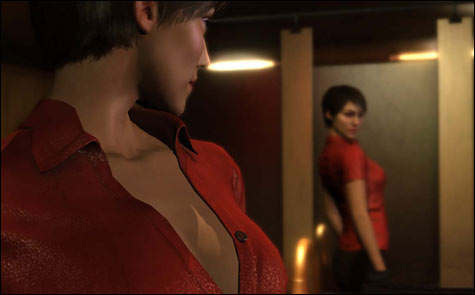 Above: Heavy Rain would have been my pick for the game that definitely won't come out on schedule.
My winter games preview is up now at thephoenix.com. As you probably already know, it's an astonishing line-up this year, more like a Christmas schedule than a winter one. And, of course, immediately after it was too late to change anything in print, one of the games was delayed. Whoever had Lost Planet 2 in your office pool, enjoy your winnings.
Back to vacation I go. The slopes await!
Monday, December 28, 2009
Games of the decade: Leftovers
In the course of putting together the list of my favorite games of the decade, I omitted several great games. In the spirit of inclusiveness, here are a few that I wish had been on there.
Games that barely missed the cut
Yakuza/Yakuza 2 - A phenomenal series packed with humor, pathos, and bone-crunching hits. News that Yakuza 3 is coming Stateside is welcome, indeed.
Ratchet and Clank (series) - I feel like a lot of people overlook how great this series is, given that Insomniac delivers a fun, visually pleasing game every year like clockwork. That's not easy to do. I'm sorry that I also overlooked it in this list. Tough omission.
Call of Duty 4: Modern Warfare - With a terrific single-player campaign and best-in-class multiplayer, or so they tell me, I left this one off mostly out of spite for the sequel. But it is still terrific.
Games that wouldn't have missed the cut if I hadn't forgotten them
Left 4 Dead - An unforgivable omission, and a total brainfart on my end. I love this game. I feel bad. Actually, several times I thought about what to write in the blurb before realizing that I hadn't actually put it anywhere on the list. Dumb.
Fairway Solitaire - Mainstream bias may have hurt Fairway Solitaire here. I just plum forgot about it. But I can't recommend it highly enough.
Games that seem like they might have made the cut if I'd ever played them
Silent Hill 2 - I've enjoyed other Silent Hill games, and tales of sexual repression and self-loathing are always a good time.
Eternal Darkness - Before Denis Dyack lost his marbles.
Beyond Good and Evil - It's so well regarded in certain circles, I feel like I'm missing something big by not having played this.
Deus Ex - I played the demo. It seemed okay.
Thursday, December 24, 2009
Year in review: The best games of 2009
 Above: I've said it before, and I'll say it again. Ain't no rest for the wicked awesome.
We're wrapping up our recap of the year that was. Today: the best games of 2009.
At last we come to it. You can click through to the feature on thephoenix.com to read the blurbs for each game, but for easy reference, and with all the usual caveats, here's my top 10 of 2009:
That concludes our coverage of 2009. We're not turning the lights out for the holidays here at Insult Swordfighting, but posting is likely to be light until the new year. As always, thank you for reading. Merry Christmas, and a happy New Year!
Games of the decade: Resident Evil 4
The last of a series of subjective looks at my favorite games of the decade.

In the five-plus years I've been reviewing games, I've given a score of 10/10 on four separate occasions. Two of those were for Resident Evil 4. No, it's not perfect, in the sense that no game ever could be, but in all the ways that matter, it is my idea of a perfect game.
I had been a fan of the Resident Evil games going way back, but by the time I played Zero I felt that the franchise was more than out of gas. I put about three hours into that game and couldn't summon the will to go on. It was impossible to ignore the positive buzz building around the fourth installment, but even so, I went to Best Buy and picked it up because we needed something to review, not because I was expecting anything earth-shaking.
My blase attitude lasted about five minutes, by which time the game's opening sequence fairly well blew it away. There's a little bit of ominous lead-up to the real opening sequence. First Leon is abandoned by the unfriendly local cops, then he encounters a crazy man in a farmhouse, then he sees one of the cops being burned at the stake in the town square. It is all creepy and very well done. But it still doesn't prepare you for the onslaught that comes next.
Years later, my head still spins when I remember that opening shootout. The designers played me like a fiddle. They showed me Leon pushing a bookcase in front of a window, and so I understood that I could use the other furniture to barricade myself in. I felt very pleased with myself, listening to the plagas struggling on the other side of what I presumed to be sturdy, artisanal furniture, and I don't know why I didn't realize that they could break through it until they did.
So I ran upstairs, where I was again surprised by the sight of plagas clambering in through the windows. Here's where the interface came into play: any time Leon was near an interactive object or location, a button popped up letting me know. So I leaped out the window, darted across the courtyard, and climbed a ladder onto a rooftop. The big button appeared, informing me that I could knock the ladder down. "This is too easy!" I thought. I ran to the other side of the roof and kicked down another ladder. "I'll just stand up here and pop them all in the head."
As I turned back around, ready for the turkey shoot, up came the ladder I had just knocked down. That's when I knew this game had me completely. And that's before the chainsaw guy showed up!
The crazy thing, though, is that RE4 never slowed down from there. It raised the stakes at every turn. More impressively, it finagled endless variety out of a streamlined interface and a limited moveset. Leon couldn't do very much: he could run, aim, and shoot, or he could performed those predetermined contextual actions. From this Resident Evil 4 presented one inventive setpiece after another, never repeating itself, and often exploiting the player's own laziness. You beat the first El Gigante, and later the game sics two of them on you. One is easy to dispatch by dropping into a pool of lava, and if you're like me, you're feeling relieved at this point that you know how to kill the second one. Except, oops, now the lava pool is sealed shut.
In the end, that might be what makes Resident Evil 4 so great.* At every stage, Capcom carefully sets your expectations, and then swiftly knocks them down. Playing this game is like going up against a great poker player: he knows exactly what you're holding, and how to fool you into thinking he's holding something else. Except in this case, you're the one winning the jackpot.
*N.B. I've been trying to explain for almost five years what makes Resident Evil 4 so great, and I don't think I've gotten it right yet.
More on Resident Evil 4:

Resident Evil 4
(2005, Nintendo GameCube and PlayStation 2; 2007, Wii)
In the five-plus years I've been reviewing games, I've given a score of 10/10 on four separate occasions. Two of those were for Resident Evil 4. No, it's not perfect, in the sense that no game ever could be, but in all the ways that matter, it is my idea of a perfect game.
I had been a fan of the Resident Evil games going way back, but by the time I played Zero I felt that the franchise was more than out of gas. I put about three hours into that game and couldn't summon the will to go on. It was impossible to ignore the positive buzz building around the fourth installment, but even so, I went to Best Buy and picked it up because we needed something to review, not because I was expecting anything earth-shaking.
My blase attitude lasted about five minutes, by which time the game's opening sequence fairly well blew it away. There's a little bit of ominous lead-up to the real opening sequence. First Leon is abandoned by the unfriendly local cops, then he encounters a crazy man in a farmhouse, then he sees one of the cops being burned at the stake in the town square. It is all creepy and very well done. But it still doesn't prepare you for the onslaught that comes next.
Years later, my head still spins when I remember that opening shootout. The designers played me like a fiddle. They showed me Leon pushing a bookcase in front of a window, and so I understood that I could use the other furniture to barricade myself in. I felt very pleased with myself, listening to the plagas struggling on the other side of what I presumed to be sturdy, artisanal furniture, and I don't know why I didn't realize that they could break through it until they did.
So I ran upstairs, where I was again surprised by the sight of plagas clambering in through the windows. Here's where the interface came into play: any time Leon was near an interactive object or location, a button popped up letting me know. So I leaped out the window, darted across the courtyard, and climbed a ladder onto a rooftop. The big button appeared, informing me that I could knock the ladder down. "This is too easy!" I thought. I ran to the other side of the roof and kicked down another ladder. "I'll just stand up here and pop them all in the head."
As I turned back around, ready for the turkey shoot, up came the ladder I had just knocked down. That's when I knew this game had me completely. And that's before the chainsaw guy showed up!
The crazy thing, though, is that RE4 never slowed down from there. It raised the stakes at every turn. More impressively, it finagled endless variety out of a streamlined interface and a limited moveset. Leon couldn't do very much: he could run, aim, and shoot, or he could performed those predetermined contextual actions. From this Resident Evil 4 presented one inventive setpiece after another, never repeating itself, and often exploiting the player's own laziness. You beat the first El Gigante, and later the game sics two of them on you. One is easy to dispatch by dropping into a pool of lava, and if you're like me, you're feeling relieved at this point that you know how to kill the second one. Except, oops, now the lava pool is sealed shut.
In the end, that might be what makes Resident Evil 4 so great.* At every stage, Capcom carefully sets your expectations, and then swiftly knocks them down. Playing this game is like going up against a great poker player: he knows exactly what you're holding, and how to fool you into thinking he's holding something else. Except in this case, you're the one winning the jackpot.
*N.B. I've been trying to explain for almost five years what makes Resident Evil 4 so great, and I don't think I've gotten it right yet.
More on Resident Evil 4:
Wednesday, December 23, 2009
Year in review: The worst games of 2009
 Above: "It's just me hitting orcs with an axe for an hour and a half. It cost 80 million dollars."
Today through Christmas Eve, we'll be recapping the year that was. Today: The worst games of the year.
For some reason, every year when I go back over the reviews I've written, I'm much more picky about what to include on the list of the worst games than the best. I'm not sure why. I think it stems from a genuine desire to respect other people's opinions. Even though I'm comfortable panning something popular, it seems like a dick move to take the next step and declare something to be definitively bad, especially when I'm in the minority. It's a good thing when people hold different opinions about games, isn't it?
Even so, the only thing people like arguing about more than a list of the best games of the year is a list of the worst games of the year, so here you go.
First, there are the games that undeniably had their merits. Not necessarily badly made, they were lacking in some crucial area.
New Super Mario Bros. had the classic level design that fans loved, not to mention graphics and sounds that put anybody over the age of 20 on the express train to Nostalgia Land. Thanks to insanely frustrating co-op play, it also nearly caused me to have to spend the night on the couch. Hot tip: Don't play video games with me unless you enjoy profanity.
I covered Brütal Legend already, in the superlatives post, so I won't say much more about it here, except that no game this year disappointed me more, because I expected so much. My own fault, I guess.
Scribblenauts is a terrific idea that works sporadically in a toy-like way, but didn't make for much of a game. I would definitely play whatever 5th Cell does next, but I hope they listened to some of the criticisms of this game.
Wanted: Weapons of Fate was actually a fun way to spend an afternoon, but you've got to be kidding me, charging $60 for a five-hour game that has no multiplayer. I'm all for keeping your game short if the quality is high, but at some point you're just showing contempt for the consumer. (By all accounts, it sounds like Rogue Warrior is a much worse game, and is only half as long, so I kind of wish I'd played it, if only for this list.)
Next are the games I really didn't enjoy, to the point where I actually couldn't understand why people liked them. inFamous is chief among these, with a robust Metacritic score of 85, and many vocal fans. There was almost nothing I liked about it. I thought it was self-serious, I thought the magnetic platforming was sloppy and intrusive, and I thought the combat was dull. Prototype was far superior.
Like its predecessor, Puzzle Quest: Galactrix was a great idea with a horrible execution. The Nintendo DS version especially was ugly, slow, choppy, and all around unpleasant to play. None of the problems from Challenge of the Warlords were rectified. I won't be playing the next one.
Arcade-style sports games are a great idea, but The Bigs 2 was a terrible one. Although the home run derby made for a passable side game, the problem with the main game was that, with all its exaggerations and hyperbole, it lost sight of the spirit of baseball. NBA Jam was great because it took what's enjoyable about basketball and amplified it. The Bigs 2 took what's enjoyable about baseball and threw it in the trash.
We're really into the dreck now. The Godfather Part II would have been nothing more than a lousy GTA clone, if it weren't carrying such an august name. Badly made games are a dime a dozen, but games that crap all over the legacy of one of the greatest American films are rare indeed. Frances Ford Coppola would be furious about this, if he were still alive.
But the worst game I played this year was also the first game I played this year. Lord of the Rings: Conquest was a viscerally unpleasant game to play. It was just bursting with bad decisions. Believe me, I take no pleasure in knowing that a lot of people lost their jobs when Pandemic closed down recently, but if you want to know why it happened, this game is a good place to start.
Tomorrow: The best games of 2009.
Games of the decade: Rock Band
Part of a series of subjective looks at my favorite games of the decade.

Forget the Wii. For mass appeal, nothing beats Rock Band. And it's got longevity, too, thanks to a forward-thinking business model that ensures several new tracks to download every week. Rock Band is so interesting from a technical and business standpoint that it would be easy to forget to mention the real reason it's such a phenomenon: it's the most fun freaking thing in the world.
Look, Guitar Hero was incredible. I will never forget what it felt like the first time I played that game. That's not the same sensation I got when I first tried Rock Band, where I knew what to expect. But Rock Band has so much more to offer. The satisfaction of reaching expert difficulty on the drums was much deeper than it was for guitar, because, damn it, it really was like playing the drums! The singing component opened the game up to players who felt uncomfortable trying to handle the game controllers, even as user-friendly as they were.
And the tracklists are just great. Money talks, and the massive commercial success of Guitar Hero paved the way for more songs and more master tracks. Here's another place where Rock Band and Guitar Hero diverge: while GH pursued chart-toppers, Rock Band went for quality, showing what Iroquois Pliskin called "a curatorial esteem for musicianship above other factors." I have gotten into more new bands thanks to Rock Band than at any time since college. The game has made me appreciate classic bands I'd overlooked, while introducing me to current artists I might never have heard of.
More important, it has made me a more active listener of music. Used to be that I mostly heard whatever was more prominent in the mix, the singer's voice or a guitar solo. Now I can pick out bass lines, and understand drum parts. In the course of listening to a song I can dissect it and put it back together again. This is an ability I've never had before. When I hear people warning that music games are eroding our appreciation of music, I have to laugh. It's exactly the opposite.
More on Rock Band:

Rock Band
(2007, Xbox 360, PlayStation 2, and PlayStation 3; 2008, Wii)
Rock Band 2
(2008, Xbox 360, PlayStation 2, PlayStation 3, and Wii)
Forget the Wii. For mass appeal, nothing beats Rock Band. And it's got longevity, too, thanks to a forward-thinking business model that ensures several new tracks to download every week. Rock Band is so interesting from a technical and business standpoint that it would be easy to forget to mention the real reason it's such a phenomenon: it's the most fun freaking thing in the world.
Look, Guitar Hero was incredible. I will never forget what it felt like the first time I played that game. That's not the same sensation I got when I first tried Rock Band, where I knew what to expect. But Rock Band has so much more to offer. The satisfaction of reaching expert difficulty on the drums was much deeper than it was for guitar, because, damn it, it really was like playing the drums! The singing component opened the game up to players who felt uncomfortable trying to handle the game controllers, even as user-friendly as they were.
And the tracklists are just great. Money talks, and the massive commercial success of Guitar Hero paved the way for more songs and more master tracks. Here's another place where Rock Band and Guitar Hero diverge: while GH pursued chart-toppers, Rock Band went for quality, showing what Iroquois Pliskin called "a curatorial esteem for musicianship above other factors." I have gotten into more new bands thanks to Rock Band than at any time since college. The game has made me appreciate classic bands I'd overlooked, while introducing me to current artists I might never have heard of.
More important, it has made me a more active listener of music. Used to be that I mostly heard whatever was more prominent in the mix, the singer's voice or a guitar solo. Now I can pick out bass lines, and understand drum parts. In the course of listening to a song I can dissect it and put it back together again. This is an ability I've never had before. When I hear people warning that music games are eroding our appreciation of music, I have to laugh. It's exactly the opposite.
More on Rock Band:
Tuesday, December 22, 2009
Year in review: Honorable mentions
Today through Christmas Eve, we'll be recapping the year that was. Today: 2009 honorable mentions.
 We may never see another year like 2007 again, when we were treated to one astonishing game after another. But 2009 was no slouch. Like last year, quality was generally high, with just a few stinkers, and even those often suffered more from understandable fatal flaws than from all-encompassing ineptitude. No doubt about it, I played a lot of good games this year.
In chronological order:
Skate 2: Still extremely challenging, Skate 2 improved upon its predecessor mostly by giving you the ability to walk up steps, which was very necessary.
F.E.A.R. 2: Project Origin: A mish-mash of styles that didn't all work together, this game had enough high points to be worth playing.
Killzone 2: Graphically impressive and with a fun, team-based multiplayer mode, it wasn't one of the best FPSes ever made, even if you do have a functioning brain. But it was a good one.
MadWorld: Sort of a better idea than it was a game, MadWorld was striking and unusual, and comically violent.
Guitar Hero: Metallica: I'll be honest with you. This, not The Beatles, was my favorite music game of the year.
The Chronicles of Riddick: Assault on Dark Athena: This would be here if it were only the high-definition remake of Escape from Butcher Bay. The Dark Athena chapter is not quite as good, but actually better than I thought people gave it credit for.
Punch-Out!!: Absolutely worthy of the name. Extremely fun. Also controller-throwingly difficult. (But what isn't, really?)
Ghostbusters: The Video Game: Funny, breezy, colorful -- the definition of good but not great. It's also my nephew Sam's favorite game to play with me, besides X-Men Origins: Wolverine. Which reminds me...
X-Men Origins: Wolverine: I never wrote about this game, but I played it a little and found it to be a fun, good-looking beat-'em-up with some neat cinematic events. It's also unbelievably gory. Did I mention Sam is four years old?
Tales of Monkey Island: Launch of the Screaming Narwhal: Telltale is doing a fine job with the LucasArts relaunches. Not so fine that I sought out the subsequent episodes, but hey, I'm a busy man.
'Splosion Man: Another challenging throwback to the sidescrolling era, this played like Sonic the Hedgehog mixed with the "Barrel Blast" level of Donkey Kong Country.
Fat Princess: A surprisingly relaxing take on competitive capture-the-flag gaming.
The Beatles: Rock Band: Well, it is the Beatles, after all.
Call of Duty: Modern Warfare 2: A really slick package.
Assassin's Creed II: It takes a good eight hours to get to the point where this game is fun. Once there, it can be, at times, brilliant, but it still gets in its own way too much.
Tomorrow: The worst games of 2009.
Games of the decade: Shadow of the Colossus
Part of a series of subjective looks at my favorite games of the decade.

2005 was a big year. In the spring, the Phoenix started publishing game reviews in print, after running them online for about a year. They kicked it off with a cover story in which I reviewed three of the winter's biggest highest-profile releases (which were Resident Evil 4, NBA Street Vol. 3, and Mercenaries -- in retrospect, only one of those was really worth the ink). For all the talk of digital media being the future, or even the present, hard copy lends a certain invaluable legitimacy.
Feeling the pressure of a bigger megaphone, or at least a more prestigious one, I also started aiming a little higher with my reviews. I wanted to talk about theme, and narrative, and meaning. Only trouble was, most games were impervious to this kind of criticism. (Sadly, this is still true.) Shadow of the Colossus, on the other hand, was a game that seemed to be crying out to be taken seriously. I still know of few other games that manage to synthesize such real emotion out of their digital parts.
Reading my review now (sorry for the formatting), it's clear that I didn't quite succeed in that goal, but it's a pretty significant step forward, even if you include all the ill-advised humor and the cringe-inducing closing sentence. This is one of many games it's easy to point to when people question the legitimacy of games as an artistic medium, so much so that it's almost a cliche at this point. But what else can you call it? Games took a big leap this decade, and Shadow of the Colossus was on the vanguard. It was the first of many impressive games in the latter half of the decade that grabbed players by the lapels and demanded that they take accountability for their actions. In some sense, it did the same for me as a reviewer.
More on Shadow of the Colossus:

Shadow of the Colossus
(2005, PlayStation 2)
2005 was a big year. In the spring, the Phoenix started publishing game reviews in print, after running them online for about a year. They kicked it off with a cover story in which I reviewed three of the winter's biggest highest-profile releases (which were Resident Evil 4, NBA Street Vol. 3, and Mercenaries -- in retrospect, only one of those was really worth the ink). For all the talk of digital media being the future, or even the present, hard copy lends a certain invaluable legitimacy.
Feeling the pressure of a bigger megaphone, or at least a more prestigious one, I also started aiming a little higher with my reviews. I wanted to talk about theme, and narrative, and meaning. Only trouble was, most games were impervious to this kind of criticism. (Sadly, this is still true.) Shadow of the Colossus, on the other hand, was a game that seemed to be crying out to be taken seriously. I still know of few other games that manage to synthesize such real emotion out of their digital parts.
Reading my review now (sorry for the formatting), it's clear that I didn't quite succeed in that goal, but it's a pretty significant step forward, even if you include all the ill-advised humor and the cringe-inducing closing sentence. This is one of many games it's easy to point to when people question the legitimacy of games as an artistic medium, so much so that it's almost a cliche at this point. But what else can you call it? Games took a big leap this decade, and Shadow of the Colossus was on the vanguard. It was the first of many impressive games in the latter half of the decade that grabbed players by the lapels and demanded that they take accountability for their actions. In some sense, it did the same for me as a reviewer.
More on Shadow of the Colossus:
Subscribe to:
Posts (Atom)